
While reading the hugely enjoyable The Once and Future King by TH White last year I kept coming across sections that made me think: Oh, that’s Neptune in Aries! So here’s a collection of quotes and my rambling thoughts about what King Arthur and Merlin can teach us about fighting, war, justice, morality, humanity, and progress.
The Once and Future King is a collection of books about the legend of King Arthur based on Le Morte d’Arthur by Thomas Malory which was published in 1483 just before the last Neptune midpoint. That makes the Arthurian legends one of the founding myths of the West due for a makeover (like Faust), although the original tale is much older. TH White felt that the central theme of Le Morte d’Arthur was to find an antidote to war and he wrote his version while World War 2 raged around him.

My notes start with the 3rd book The Ill-Made Knight which is about Lancelot and Guinevere. King Arthur is trying to work out how to direct the fighting force of his knights and how to control Might. He started by establishing Right by Might which involved getting his knights to fight for justice and solving problems, like saving damsels in distress. But this didn’t solve the problem.
Arthur explains that they achieved justice but still have fighters who have nothing to fight for:
“While there were still giants and dragons and wicked knights of the old brigade, we could keep them occupied: we could keep them in order. But now that the ends have been achieved, there is nothing for them to use their might on.”
As a result of this, the chivalric code started to fester and turned into ‘Games-Mania’ with the knights getting hung up about their tilting averages and who was the best knight. And then the murders and feuds started.
The Might started to run into wicked channels instead. So the whole Round Table idea is going to ruin and has lost its moral sense:
“And when a moral sense begins to rot it is worse than when you had none. I suppose that all endeavours which are directed to a purely worldly end, as my famous Civilisation was, contain within themselves the germs of their own corruption.”
So Arthur says he’s going to send his knights to the Pope – not literally – but on a quest for the Holy Grail:
“You see, the trouble is – as I see it – that we have used up the worldly objects for our Might – so there is nothing left but the spiritual ones. … If I can’t keep my fighters from wickedness by matching them against the world – because they have used up the world – then I must match them against the spirit.”
He realises that the Round Table idea was incomplete:
“…the ideal of my Round Table was a temporal ideal. If we are to save it, it must be made into a spiritual one. I forgot about God.”
So the knights go off on their new quest. But it doesn’t quite work the way Arthur thinks it will.

In the next book, Candle in the Wind, Arthur is feeling defeated and disillusioned. Merlyn taught him that man was perfectible and inherently good but perhaps he was deluded about that. He has been fighting against the mental illness of humanity, against Force, but this relied on the premise that man was decent underneath everything else. Here’s a long quote that summarises the problem:
“Looking back at his life, it seemed to him that he had been struggling all the time to dam a flood, which whenever he had checked it, had broken through at a new place, setting him his work to do again. It was the flood of Force Majeure. During the earliest days before his marriage he had tried to match its strength with strength…only to find that two wrongs did not make a right. But he had crushed the feudal dream of war successfully.
“Then, with his Round Table, he had tried to harness Tyranny in lesser forms, so that its power might be used for useful ends. He had sent out the men of might to rescue the oppressed and to straighten evil – to put down the individual might of barons, just as he had put down the might of kings. They had done so – until, in the course of time, the ends had been achieved, but the force had remained upon his hands unchastened.
“So he had sought for a new channel, had sent them out on God’s business, searching for the Holy Grail. That too had been a failure, because those who had achieved the Quest had become perfect and been lost to the world, while those who had failed in it had soon returned no better.
“At last he had sought to make a map of force, as it were, to bind it down by laws. He had tried to codify the evil uses of might by individuals, so that he might set bounds to them by the impersonal justice of the state. …
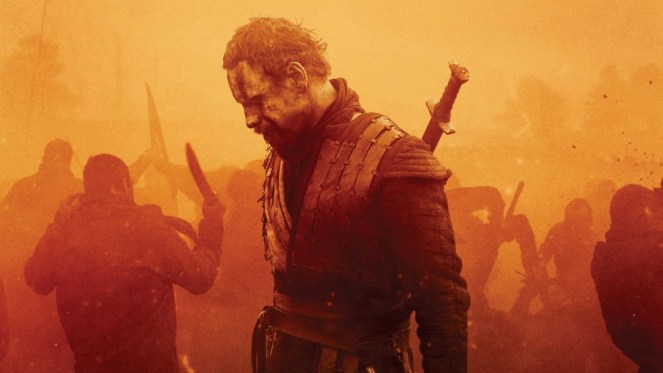
“And then, even as the might of the individual seemed to have been curbed, the Principle of Might had sprung up behind him in another shape – in the shape of collective might, of banded ferocity, of numerous armies insusceptible to individual laws. He had bound the might of units, only to find that it was assumed by pluralities. He had conquered murder, to be faced with war. There were no Laws for that.”
Specifically, total war and total hatred. Arthur muses about evolution and whether Might is a law of Nature designed to sort out the survival of the fittest. Then again, maybe not. Maybe it’s just survival of the most brutal and insane.
The final book, The Book of Merlyn, explores these ideas further and there’s a whole debate about whether or not mankind is good or wicked. Arthur visits Merlyn and the various animals that he encountered in the first book and listens as they try to solve the problem of humanity.
TH White puts his rant into the mouth of Merlyn who rages against mankind while the animals do their best to reassure Arthur that it’s not all bad. The Book of Merlyn is a bit of a mess but there’s some interesting ideas, even if he goes off the deep end a few times.
They discuss the naming of man and say that he is misnamed as homo sapiens (wise man). Perhaps he should be called homo ferox (fierce man). But Merlyn explains that he was taking things too literally:
“To disbelieve in original sin, does not mean that you must believe in original virtue. It only means that you must not believe that people are utterly wicked.”
In other words, there is hope that people can change, or at least that some are capable of doing good. But you can’t do it for them, as Merlyn explains:
“Nobody can be saved from anything, unless they save themselves. It is hopeless doing things for people – it is often very dangerous indeed to do things at all – and the only thing worth doing for the race is to increase its stock of ideas. Then, if you make available a larger stock, the people are at liberty to help themselves from out of it. By this process the means of improvement is offered, to be accepted or rejected freely, and there is a faint hope of progress in the course of the millennia. Such is the business of the philosopher; to open new ideas. It is not his business to impose them on people.”
He tells Arthur that he has been
“teaching man to think in action. Now it is time to think in our heads.”
Merlyn also has a good long rant about the myth of progress, what he calls:
“the Great Victorian Hubris, the amazing, ineffable presumption of the nineteenth century.”
And now:
“Man, proud man, stands there in the twentieth century, complacently believing that the race has ‘advanced’ in the course of a thousand miserable years, and busy blowing his brothers to bits.” …
“Where is this marvellous superiority which makes the twentieth century superior to the Middle Ages, and the Middle Ages superior to primitive races and to the beasts of the field? Is man so particularly good at controlling his Might and his Ferocity and his Property? What does he do? He massacres the members of his own species like a cannibal!”

There’s a lot of depressing stuff about how crap mankind is and you can’t argue with it. Then he explains how they figure humanity is organised politically in another long quote:
“We find that at present the human race is divided politically into one wise man, nine knaves, and ninety fools out of every hundred. That is, by an optimistic observer. The nine knaves assemble themselves under the banner of the most knavish among them, and become ‘politicians’; the wise man stands out, because he knows himself to be hopelessly outnumbered, and devotes himself to poetry, mathematics or philosophy; while the ninety fools plod off behind the banners of the nine villains, according to fancy, into the labyrinths of chicanery, malice and warfare.
“It is pleasant to have command, observes Sancho Panza, even over a flock of sheep, and that is why the politicians raise their banners. If it is democracy, then the nine knaves will become members of parliament; if fascism, they will become party leaders; if communism, commissars. Nothing will be different, except the name. The fools will be still fools, the knaves still leaders, the results still exploitation.
“As for the wise man, his lot will be much the same under any ideology. Under democracy he will be encouraged to starve to death in a garret, under fascism he will be put in a concentration camp, under communism he will be liquidated. This is an optimistic but on the whole a scientific statement of the habits of Homo impoliticus.”
That is: impolite man, or perhaps uncivil, impudent or unrefined. This is a brilliant description of how society is organised – highly relevant for Pluto in Aquarius too. Sancho Panza is a reference to Don Quixote which parodies chivalry and would be another great read for Neptune in Aries.
Later Merlyn explains that he’s an anarchist, “like any other sensible person,” and goes on to say:
“In point of fact the race will find that capitalists and communists modify themselves so much during the ages that they end by being indistinguishable as democrats; and so will the fascists modify themselves, for that matter. But whatever may be the contortions adopted by these three brands of collectivism, and however many the centuries during which they butcher each other out of childish ill-temper, the fact remains that all forms of collectivism are mistaken, according to the human skull. The destiny of man is an individualistic destiny…”
Like the anarchist geese in the story, because “They realise that the moral sense must come from inside, not from outside.”
Badger suggests that communism ultimately leads to anarchism because the state is supposed to wither away eventually. But Merlyn doubts that would work:
“I cannot see how you may emancipate an individual by first creating an omnipotent state. There are no states in nature, except among monstrosities like the ants. It seems to me that people who go creating states, as Mordred is trying to do with his Thrashers, must tend to become involved in them, and so unable to escape. But perhaps what you say is true. I hope it is. In any case let us leave these dubious questions of politics to the dingy tyrants who look after them. … meanwhile [we] must wait for the race to grow up.”
And we’re still waiting…
Read more on King Arthur here: The Fisher King film, and more on the symbolism of Knights and spiritual armour here: An Unexpected Gift
Explore all Neptune in Aries posts here
Thanks for reading! If you enjoy this blog and would like to support my work, please donate below 🍵. Thanks in advance! 🙏❤️

 Jessica Davidson