
A few years ago I was diagnosed with osteoporosis while Saturn was conjunct Pluto in Capricorn in my 12th house. I began to research the disease and was shocked to discover dubious diagnostic assumptions based on statistical analysis and averages. But even worse, the definition of the disease had been changed to expand the market for drugs. In this post we’ll explore the nature of those drugs and whether they work as advertised.

Back in the days before risk scores and scans, to be diagnosed with osteoporosis you had to have a fragility fracture. But that changed in the late 1980s when the DEXA scan was developed, opening up a whole new world of statistical shenanigans. To make the scanners useful, they needed to establish a threshold for normal bone mineral density (BMD), so a meeting was convened and guidelines were created.
The new diagnostic criteria were published in 1994 by the WHO which declared the BMD of young women as normal and a score of less than -2.5 as a sign of osteoporosis (see last post). They were now able to identify more potential patients of the disease but they needed treatment options.
So it’s no surprise that according to Selling Sickness (BMJ, 2002), the meeting where the criteria were set was sponsored by three pharmaceutical companies. It wasn’t long before the first drug, alendronate, was rolled out in 1995. Overdiagnosis of bone fragility (BMJ, 2015) says that when the FRAX prediction tool was introduced in 2008, even more people were identified as being at risk and given drugs. (Read about the whole terrible saga here.)
Osteoporosis is generally treated using bisphosphonates in varying potencies, including Alendronate (such as Fosamax), Risedronate (Actonel), and Ibandronate (Boniva). Bisphosphonates were first synthesised in 1865, and as Bisphosphonates: Mechanisms of Action explains were:
“used in industry, mainly as corrosion inhibitors or as complexing agents in the textile, fertilizer, and oil industries.”
They’re useful in preventing scaling due to hard water and when used in pharmaceuticals they bind to calcium ions in the bones. This makes bisphosphonates useful in treating osteoporosis because they reduce bone turnover by inhibiting the osteoclasts. If you remember from last time, osteoclasts are the cells that breakdown old bone and reabsorb it so the osteoblasts can rebuild new bone.
The idea is that the drugs slow down or stop the breakdown of old bone and that helps the bone building cells to catch up, making your bones denser. But they do this by interfering with the metabolic process, stopping it from functioning normally. This usually isn’t a good idea and the consequences range from annoying side-effects to extremely debilitating effects.
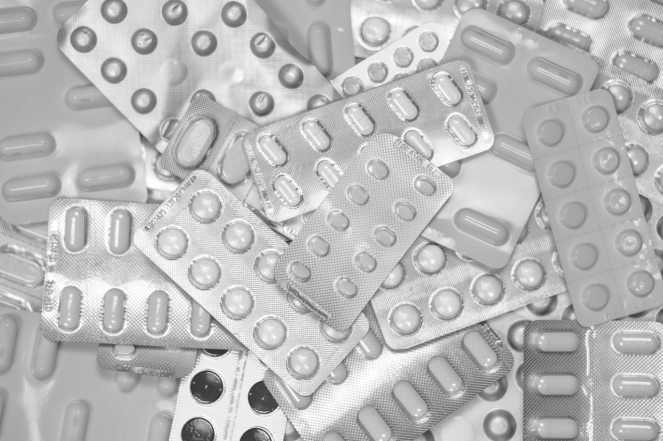
The tablets are notoriously toxic. To reduce negative reactions some of the tablets are taken once a week with a large glass of water to make sure it gets washed down properly. You’re instructed not to lie down or eat anything for at least 30 minutes after swallowing it to ensure your stomach acid fully dissolves the tablet to render it ‘safe’.
Common side-effects of bisphosphonates include constipation, diarrhoea, nausea, heartburn, inflamed throat, difficulty swallowing, muscle pains, and bone and joint pain. Others include bleeding guts, inflammation of the eyes and disturbed vision, as well as hair loss, skin rashes, loose teeth, mouth sores and ear infections. If you’re really unlucky, the most serious but rare effects are osteonecrosis of the jaw, oesophageal cancer, and atypical fractures in the femur. 😳
Okay, so the drugs are nasty, but do they work?
In the Selling Sickness paper, the authors show that the risk of fractures is low for most healthy people and the drug treatments on offer make very little difference, if any, to reducing that risk. One study gave the absolute risk reduction (ARR) for vertebral fractures as only 1.7%.
Overdiagnosis of bone fragility (BMJ, 2015) contains a meta-analysis of 33 papers and identifies gaps in the evidence for drug efficacy. The mean age for hip fractures in Europe is about 80 years and over 75% of fractures occur in people over 75. But many of the drug trials don’t include enough women in that age group, and all the trials failed to show any significant effect on hip fractures in that group. And there are no trials that focus on hip fractures in men.
They also point out that the age-adjusted number of hip fractures has fallen steadily, but this doesn’t appear to be due to drug treatment. This raises questions about the cost effectiveness of using something that doesn’t appear to work very well. In fact, evidence for cost effectiveness is based on assumptions, not on actual trials:
“Current assertions that drug treatment is cost effective are based on computer modelled analyses that disregard the evidence gaps and extrapolate efficacy estimates derived from younger women (aged 60-80) to their older peers (age >80) and to men. By assuming a constant relative risk reduction for fractures irrespective of age, sex, and baseline fracture risk, they are likely to overestimate absolute risk reduction.”
The paper goes on to suggest that fall prevention programmes, including exercise and other lifestyle changes, may provide better protection against hip fractures. Fewer than 1 in 3 hip fractures are due to bone fragility and about a third of healthy people over 65 will fall at least once a year. This rises to half by age 80. So asking whether somebody has impaired balance may be a better predictor of future fracture, as we saw in the previous post.
Most of the trials seem to focus on women over the age of 65. Since I was diagnosed with osteoporosis at age 49, thanks to an early menopause, I searched for evidence on the efficacy of these drugs in younger women. In a paper called Baseline age and time to major fracture in younger postmenopausal women (2015), the authors show there’s a very low reduction in absolute risk (ARR) for hip and vertebral fractures in women taking alendronate:
“Women aged 50 to 54 treated with alendronate had 5-year ARR of 0.1% for first spine fracture and 0.0% for first hip fracture, with analogous figures of 0.5% and 0.1% for women aged 60 to 64, and 0.7% and 0.4% for women aged 65 to 69.”
These drugs don’t appear to do much to help younger women. However, in older women the story is different. The ARR in women aged 90 and older was 11.1% for spine fracture and 2.1% for hip fracture. This is because younger women are less likely to break a bone probably because they’re not falling over as much as older women.
There’s another important detail that’s left out of these studies: bone quality. This matters because bone density doesn’t necessarily have anything to do with how strong bones are. The quality of your bones may be more relevant to fracture risk than how dense they are.
Unfortunately, bone quality can’t be detected using current screening techniques, like the DEXA scan. It’s also not included in the definition of osteoporosis, according to Osteoporosis: the evolution of a diagnosis (Journal of Internal Medicine, 2015):
“The 1994 WHO BMD-based definition of osteoporosis did not address bone microstructure or quality, which refers to bone microstructure, mineralisation, turnover, and accumulation of damage due to microfractures.”
This is bad news for fans of bisphosphonates because it turns out that these drugs reduce the quality of your bones. The drugs stop the breakdown of old bone and the process of bone reabsorption. That means any new bone will be built on top of old dead bone that should’ve been removed, making your bones more brittle and fragile over time.
But it’s even worse than that because bisphosphonates also appear to stop the rebuilding of bones too. In the Annals of Internal Medicine in 2004, Dr Susan Ott wrote:
“Many people believe that these drugs are bone builders, but the evidence shows they are actually bone hardeners and bones could become brittle.”
And:
“…bone biopsy studies from patients treated with risedronate or alendronate show that the mineralising surface, which is forming bone, decreases 80% to 96% after 3 years of treatment. The bone volume, however, does not significantly change.”
This is why bisphosphonates increase the likelihood of atypical fractures in bones like the femur (thigh bone). Bone formation effectively stops and your bones struggle to repair themselves. Quoted on What Doctors Don’t Tell You, she says:
“After five years, the fracture rates are as high in the women who keep taking alendronate as in the women who quit.”
The only thing these drugs appear to do is make your bones look denser on a DEXA scan by giving you a better score. They just cover over the problem without really fixing it. Your bones won’t necessarily be stronger or healthier or less prone to breaking.
It’s no surprise that I decided not to take the risedronate that was prescribed for my alleged osteoporosis. It certainly isn’t worth risking the side-effects of these drugs for such low efficacy. There are better things I can do to improve the health and strength of my bones.
It seems that many doctors appear to be more interested in pushing drugs than actually helping you to become well. Pharmaceutical companies go out of their way to create demand for their drugs and you don’t even need to be sick in order to be prescribed something – you just need to believe that you’re sick or could become sick.
Osteoporosis is a good example of the medicalisation of a normal process, turning aging into a disease that needs to be managed, if not cured. The treatments on offer are crude and ineffective and often create problems that are worse than the so-called disease.
Doctors and the healthcare system tend to focus on the guidelines and the output of the computer rather than the patient in front of them. They treat the body as a machine and the person as an assemblage of parts to be fixed. There are reasons for this, and it’s not just because pharmaceutical companies are giving them backhanders.
Doctors have to follow the guidelines on drugs and treatments because if they don’t, they could lose their medical licence. If they fail to follow the guidelines and you die or sprout a second head, they could be sued or struck off. But even if you take the treatment on offer and have a bad reaction, they’re safe because they followed the guidelines. It’s your bad luck that you died or your leg dropped off, or whatever.
It’s all about statistics and probabilities. There may be a small risk of having an extreme reaction to a drug in statistical terms. But that’s hardly reassuring to the relatively small number of people who end up seriously ill or worse.
You are an individual, not a statistic. You’re a human being and the healthcare system often fails to take this into account.
Doctors may also struggle to genuinely improve the health of their patients because they don’t receive enough training, if any, in nutrition, diet, or exercise. This is especially important in the treatment of osteoporosis. According to Osteoporosis: the emperor has no clothes, the best advice is the oldest: the best way to prevent fractures is to stop smoking, be active and eat well.
One of the things that made me angry during my diagnosis of osteoporosis, was the lack of information about exercise. There were posters and leaflets in the corridor at the hospital, but no specific guidance was given. And if it’s true that my back could go at any moment for no reason – according to my GP – then why was I not given comprehensive advice on what to avoid, such as leaning forward to lift things. Or told how I could strengthen my back. The advice was simply: take these drugs.
“Doctors are men who prescribe medicines of which they know little, to cure diseases of which they know less, in human beings of whom they know nothing.” – Voltaire
Next time we’ll finish this series with a look at the deeper symbolism of osteoporosis and treatment options that might actually work in Osteoporosis Symbolism and Positive Treatment Options…
Obviously, nothing in this post should be taken as medical or health advice and you should always do your own research and talk to your doctor or specialist (if you can find a good one!).
Images: Skeleton; Crack; Nurse
Thanks for reading! If you’d like to support my work, please donate below 🍵. Thanks in advance! 🙏❤️

 Jessica Davidson
I agree wholeheartedly with this – even a ‘good’ doctor is confined by the guidelines and we see this in all areas of health (e.g. the recent pandemic where only certain treatments were recommended when others were producing better results!). I wish you all the best and hope you find a good way to keep healthy without relying on drugs with side effects. Do you take vitamin D3 and K2? I have researched this a lot recently for other reasons and it is of significance for all autoimmune disease and so much more. The secret is in the dosage… all trials stating it as ineffective have used 2,000 iU Vit D3 or less, which is not enough. I take 5,000 iU a day (my partner takes 10,000iU) and 100mcg K2. I have seen long-term studies that show that it is practically impossible to overdose on vitamin D as your body regulates it once it reaches a certain level. But vitamin K2 is important as it prevents calcium being absorbed out of the bones. I hope this helps, but you may know all this anyway!
LikeLiked by 1 person
Yes, I take vitamin D and eat green leafy veg, a good source of K. The healthy treatment options post is coming next week!
LikeLike
Oh great! I have subscribed to your blog so I won’t miss it. Thanks!
LikeLiked by 1 person
Hi Jessica, I’m one of those that the doctors refuse to give answers to, simply because they do not know what the drugs are doing, care about anything but the drug lords guidelines, or for that matter even listen to their own hearts.
I had an allergic reaction to cortico steroids they gave me for emphysema (auto immune disease for the lungs). After long use I tried to go off them and the reaction was so bad with my lung inflammation that I stopped breathing. An then an interesting thing happened…as I lay there on the floor no longer breathing I stopped worrying over what was happening and I simply asked God’s forgiveness. Not for anything in particular but for my attempt at living a life the best I could, mistakes and all. And He then showed me something, (of which I wrote about and not a part of this), and then He spoke to me of two things. He said…’I am the giver of life’…and then to give a message to the medical industry which was…’where is your heart?’…(and I might add that this was aimed at those that run everything in a hospital or doctors surgery, not the workers as in nurses ets just doing what they are told), The only one’s that have no heart are those in that industry that know this is happening in all they do, for their money gods, and choose not to act. And that includes the law makers with regard to this also.
Anyway, my heart goes out to you and all those that are the guinea pigs of these people kind lady, all those that understand empathy or compassion of which these people have none.
A great post, your heart went into this with a great love to show where indeed the darkness is. For that…thank you. It is good to hear others standing up to show where there is indeed much love and light still in this world 😀❤️🙏🏽
LikeLiked by 3 people
Thank you for sharing your experience, Mark – so glad you were able to find your way to healing and true strength.
LikeLiked by 2 people
Thank you Jessica, I most certainly did find healing within myself kind lady, emotionally and spiritually. But alas physically it has trashed my immune system so badly that my adrenaline is firing constantly on all cylinders which has totally upset my cortisol production. Hormones going haywire everywhere. An interesting journey so I could see many things but some days I would love to feel human again, just for a little while…and not a guinea pig. Anyway, thank you for sharing kind lady, it is indeed appreciated 😀❤️🙏🏽
LikeLiked by 2 people
Thank you for sharing your own research. So helpful 🙏🏻
LikeLiked by 1 person
Seems that the Emperor of just about every disease you can think of has no clothes…. i would love it if we could have the Ancient Chinese System here: the people of an area pay the doctor a stipend every week they are in fine health… as soon as any person is unwell they stop their portion of the practitioner’s salary. If everyone is unwell that Doctor has a proper incentive to give the people proper help ! Those Doctors would soon abandon their Pharma recommendations and do serious Holistic research….
LikeLiked by 2 people
That would definitely change things!
LikeLiked by 1 person
I couldn’t agree with this anymore !!! I experience doctors incompetence all the time. I have an autoimmune disease and recently diagnosed with fibromyalgia ( a loose term for : we don’t know what’s wrong ) it’s incredibly scary how incompetent they really are !!! Advise ~ find a functional medicine doctor.
LikeLiked by 2 people
They’re notoriously bad at dealing with auto-immune problems. It’s almost as if they don’t understand how the body works!
LikeLiked by 2 people
to do so they’d have to take vax injuries into account.
LikeLiked by 1 person
Indeed.
LikeLike
i’ve fibro too, whatever it may mean. i’ve been increasingly ill since smallpox shot at 12/in72.
would not go near ”modern medicine”.
LikeLike