
A few weeks ago we explored the mythology of Venus and the stories used by various cultures to describe the movements of the planet. Venus is the brightest planet in the sky (not counting the luminaries) and she performs a beautiful dance with the Sun where she appears and disappears at regular intervals. In this post, we’ll explore that cycle and what it means for you…
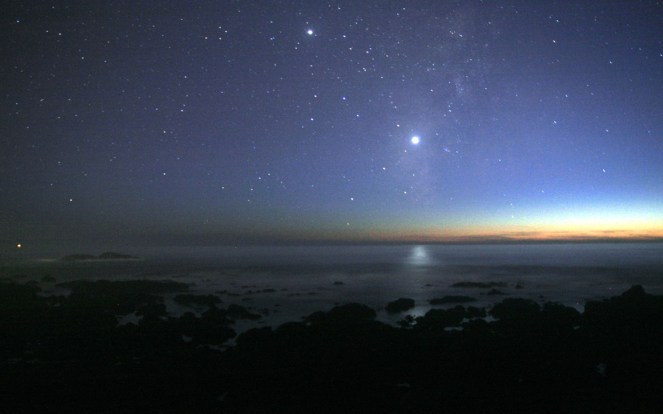
Due to her close proximity to the Sun, Venus can only be seen at certain points in her orbit when she appears as either a morning or evening star. We can also see her during rare ‘Transit of Venus’ events when the planet passes in front of the Sun. This happens during each cycle but Venus can’t be seen every time because her orbit is slightly inclined relative to the Earth’s so a Transit only happens when their orbits cross. The last Transit of Venus was in 2012 and the next doesn’t happen until 2117!
The Venus synodic cycle takes about 19 months or 584 days during which she forms two conjunctions with the Sun which happen about every 9.2 months. Between these conjunctions, Venus orbits from east to west and back again, appearing and disappearing as she moves into the glare of the Sun.
The cycle begins at the inferior conjunction when Venus is between the Earth and the Sun. This happens when Venus is retrograde and hidden from view for about 2 weeks and represents the ‘New’ phase of her orbit. The cycle peaks at the superior conjunction when Venus is direct and hidden behind the Sun for about 50 days at the ‘Full’ phase of her orbit.
The superior conjunction is when Venus goes from being a morning to an evening star when she can be seen rising in the west. She then orbits around in front of the Sun and stations retrograde and forms the inferior conjunction. The retrograde period lasts about 40 days, a significant time used in various myths and stories, such as Jesus’ time in the wilderness being annoyed by the devil.
After her sojourn in the underworld, like Inanna, Venus reappears in the east as a morning star and stations direct. She then disappears again behind the Sun and forms the superior conjunction and reappears as an evening star in the west.
Venus is furthest from the Earth during the superior conjunction when she’s on the opposite side of the Sun. She’s furthest from the Sun during her greatest elongation, the maximum distance a planet can reach in its orbit as seen from Earth. For Venus this distance is about 46° but it ranges from 45–47° because her orbit isn’t exactly circular. Here’s a handy drawing that illustrates how it works:

In the current cycle, Venus started her journey as an evening star at the end of 2022 and got further away from the Sun until she reached her greatest elongation on 4 June 2023. She’ll reach her brightest on 9 July when she comes closer to the Earth as she swings round to pass between us and the Sun. She stations retrograde on 23 July and has her inferior conjunction with the Sun on 13 August, before stationing direct again on 4 September 2023. More on Venus retrograde here.
All this toing and froing produces a beautiful pattern that reflects the deeper meaning of Venus as the goddess of love and beauty. The cycle is measured from one inferior conjunction to the next and over a period of 8 years these trace a 5-pointed star in a ratio of 13:8, meaning there are 13 Venus orbits to 8 Earth orbits.
The conjunctions between Venus and the Sun slowly shift backwards through the zodiac a few degrees at a time until they return to almost the same position. Each point of the star shifts backwards in the same way and the entire cycle endlessly repeats to produce the rose and heart patterns of Venus, like this:
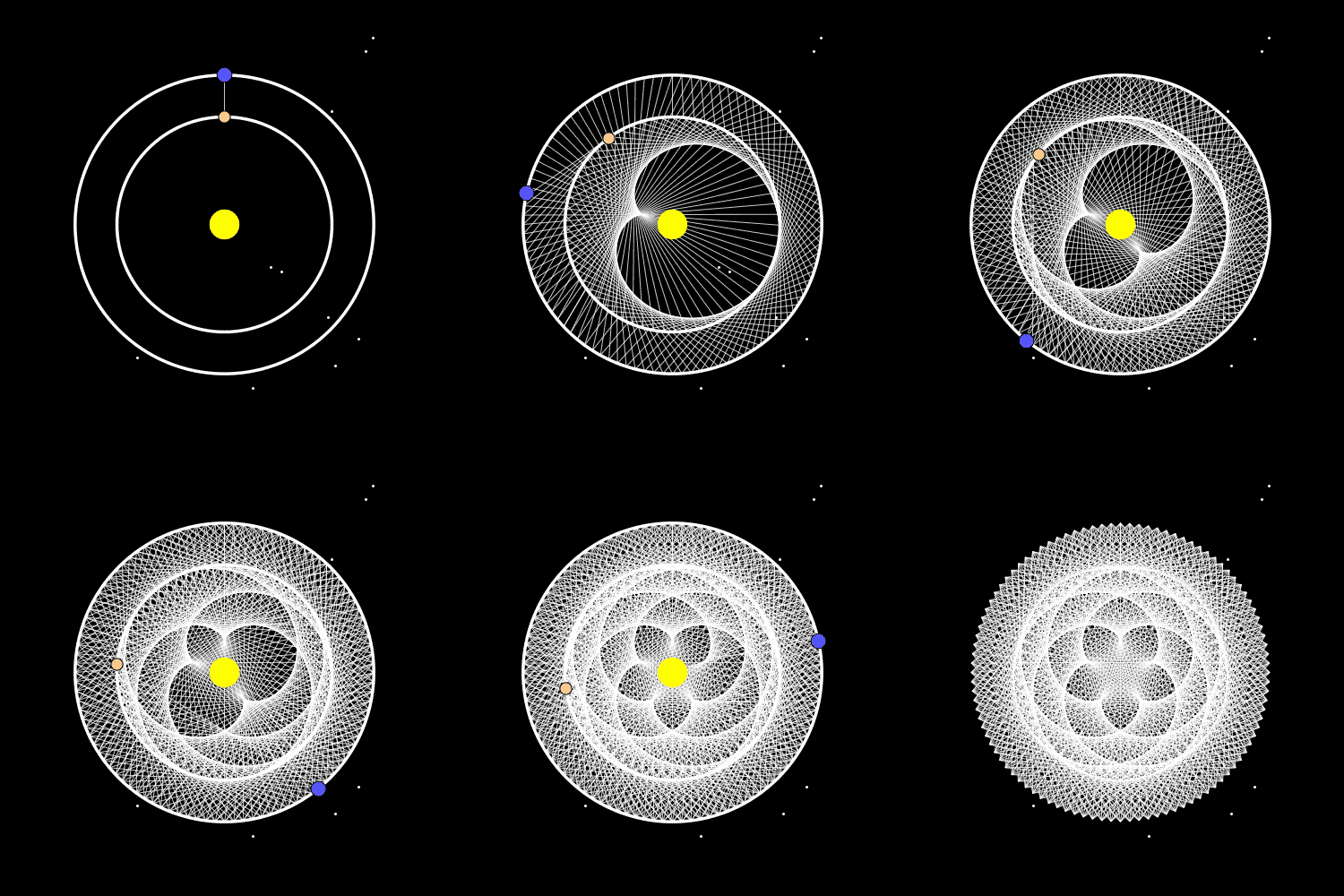
The ratio 13:8 produces the number 1.625 which is close to the Golden Ratio of 1.618 and the Fibonacci series, which approaches phi as the numbers increase in size. The Venus cycle also gives us the ratio 8:5 which produces the number 1.6 which is also close to phi.
Phi is a mathematical principle found everywhere in nature, from the very small to the enormous, from the structure of DNA to the shape of galaxies. It’s an expression of divine order, harmony and beauty, and points to the origins of Aphrodite and her relationship to Ouranos, the god of cosmic order.
The cycle of Venus reveals the sacred geometry of the cosmos and the harmonic proportions of music and mathematics that underpin the whole of astrology. There may even be a link between the Fibonacci series and the dynamic relationships between the planets in the solar system that explains the position of their orbits. Read more on this fascinating possibility here.
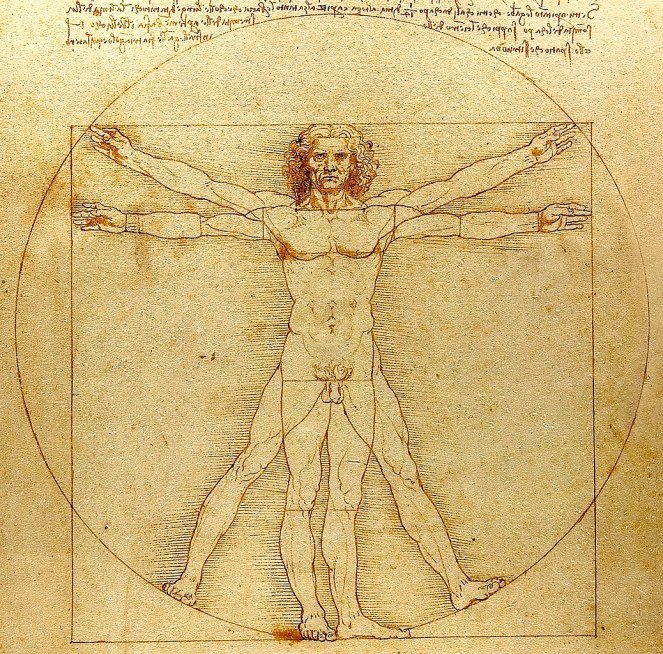
The 5-pointed star of Venus relates to the 5th harmonic and the quintile aspect of 72° which is created by dividing the circle by 5. Symbolically, the number 5 represents the incarnation of the human form and the cosmic geometry encoded in human proportions, as shown in the Vitruvian Man by Leonardo da Vinci. It’s also associated with our ability to understand reality on an aesthetic level and with the creative spirit of nature which can also become destructive.
Interestingly, the number 72 is also associated with the precession of the equinoxes and as a precessional number relates to the Great Year and the shift of the Ages – another connection to cosmic harmony and order.
The quintile aspect is similar to Venus in that it shows how you create and connect things together, as well as your sense of style and the nature of your creative or artistic work. It may show areas where you’re gifted or talented in an individual way, but unlike trines, you may be more likely to make use of them because quintiles are more tense and force action, helping to give form to your creative ideas.
The way Venus works in your birth chart depends on where she was in her cycle when you were born. If she’s conjunct the Sun, you were born at either the inferior or superior conjunction. Venus will be retrograde if you were born at the inferior conjunction during her visit to the underworld for renewal.
When she returns from the underworld as the morning star, Venus is known as Lucifer or Phosphorus, which means ‘light-bringer’. This is the start of a new cycle when Venus is in her masculine phase, making her more direct in her approach. If you have a Lucifer Venus, you may be more emotionally impulsive and spontaneous and open to new experiences, although this may only apply when Venus is direct.
When Venus crosses over to become an evening star she’s known as Hesperus, which means western. This is the waning phase of the cycle when Venus is in her feminine guise, making her more thoughtful and interested in the meaning of experience. If you have a Hesperus Venus, you may be more emotionally controlled and introverted and may take longer to recover from emotional disappointments.
There’s obviously a lot more to these Venus types and you can find out more in this article by Michael Meyer. There’s also a useful video from Aquarius Severn on the Phases of Venus here.
To work out what kind of Venus you have, look at the relationship between Venus and the Sun in your chart:
- If Venus is clockwise from your Sun and behind the Sun in the signs, then your Venus is Lucifer or a morning star
- If Venus is counterclockwise from your Sun and ahead in the signs, then your Venus is Hesperus or an evening star
For example, my Sun is in Virgo and Venus is in Libra, so Venus is ahead in the signs making my Venus Hesperus. My Sun is in the 7th house and close to setting, after which Venus could still be seen in the sky as an evening star, twinkling over my birth!

Another way to work with Venus is to look at how the Venus star activates your chart at the inferior and superior conjunctions. The conjunctions move through the same pattern of signs during the 8-year cycle to form the star. The current star points are circling through Capricorn, Scorpio, Leo, Gemini and Aries, although the Scorpio point recently toggled into Libra in 2022, which you can see in the Astro Seek image above.
The position of Venus at each star point moves back and forth between retrograde and direct every 4 years. For example, this year retrograde Venus will conjunct the Sun at 20°28’ Leo at the inferior conjunction, while 8 years ago this conjunction happened at 22°39’ Leo. However, 4 years ago the superior conjunction was at 21°11’ Leo and in 4 years’ time, it will happen at 19°06’ Leo in 2027.
This process happens at every point around the star and it will trigger your chart in patterns of signs and houses that shift slowly through your life in 72° intervals. Each star point can spend a long time in a sign – about a century or more! – so it’s a big deal when one of them shifts into a new sign.
Each point within the 8-year cycle is related to every other point and they resonate with each other across time. When these star points trigger your chart, you can become more aware of how Venus works in your life and how you experience beauty, harmony and love. It provides an opportunity to find a balance between the opposites of masculine and feminine within yourself and grow to become more whole.
You can explore the Venus Cycle and the interplay between the inferior and superior conjunctions at Astro Seek and play with their image maker here. Or find out more about the Venus Star Point cycle in this interview with Arielle Guttman on the Astrology Podcast here.
Images: Venus; Vitruvian Man
Thanks for reading! If you’d like to support my work, please donate below 🍵. Thanks in advance! 🙏❤️

 Jessica Davidson