
Last time we explored some films that express the archetypes of Saturn in Pisces with stories about the blurring of dreams and reality, karma and death, spirituality and faith, and creativity. Saturn Pisces/Neptune also manifests as political idealism, the desire for utopia and its eventual disillusionment. It’s associated with socialism and communism and the denial of religion and the transcendent.
The Lives of Others is a perfect example of Saturn in Pisces and shows what happens when creativity and spirituality are repressed and the consequences of an idealistic and oppressive political system. The film also works well for Pluto in Aquarius so this post will touch on both sets of archetypes. Expect Spoilers!!
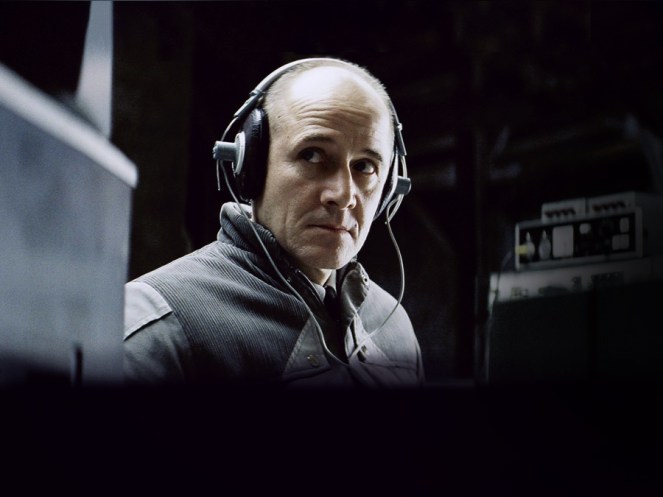
The Lives of Others is a political thriller set in Berlin, East Germany in 1984 – a nod to the novel by Orwell – about the monitoring of the population by the Stasi, the secret police of the German Democratic Republic (GDR). The GDR was a communist totalitarian state formed at the end of World War Two by Soviet forces, with a centrally planned economy.
The State was administered as a ‘Dictatorship of the Proletariat’ and watched over by 100,000 Stasi spies and even more informers. Everyone spied on everyone else, and people were encouraged to inform on their friends, neighbours and family members. The aim of the State was: “To know everything.”
Imagine what they could’ve achieved with the technology we have today. 😳
The story in the film follows Stasi captain Gerd Wiesler as he spies on playwright Georg Dreyman and his lover Christa-Maria, an actress. It begins with Wiesler teaching new Stasi recruits the art of interrogation and how to spot a liar. When one of the trainees questions the need to keep people awake for so long and calls it inhuman, Wiesler says nothing but makes a mark against the man’s name on the register.
As far as he’s concerned, the system is humanistic and rarely makes mistakes, and justifies his approach with circular reasoning. If you’ve done nothing wrong, then you wouldn’t be in prison. He explains that an innocent prisoner will become angry at the injustice of being locked up, while those who are guilty become quiet or cry and stick to their story, word for word.
Later in the film we discover how the Stasi deal with subversive artists using a variety of interrogation methods based on character profile. They don’t need to be censored or forcibly stopped from working. Approached the right way, an artist will choose to stop making art if you demoralise them enough. They simply lose all hope.
Nothing must stand in the way of the State. It must be the centre of everybody’s belief system, leaving no space for art or beauty or truth – unless that art serves the purposes of the State. Obviously, there’s no space for God or the transcendent in this system either.
Wiesler is a true believer in the system and his morality is defined by what the system says is correct behaviour. This rigid morality is challenged when he’s assigned the task of spying on Dreyman. Georg Dreyman is another true believer in communism who has been left alone by the State because he’s the only non-subversive writer who is also well-known beyond East Germany. In other words, he’s useful.
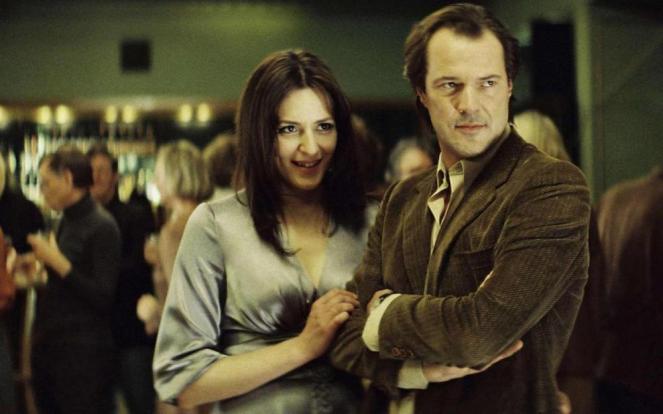
That changes when the Minister of Culture, Bruno Hempf, decides he wants Dreyman out of the way so he can claim Christa-Maria for himself. Dreyman naively believes he’s safe because he’s loyal to the State and even pushes back against the blacklisting of his friend, the director Albert Jerska. However, Dreyman pulls his punches and agrees that Jerska went too far in his criticisms of the State.
When Dreyman visits Jerska, his friend apologises for missing the premiere of his play, saying he can’t stand being around those people any more. Since his blacklisting, he’s losing the sense of himself and becoming bitter. He was friendly and caring when nourished by success but that success was only at the grace of the “bigwigs”.
“What’s a director if he can’t direct? A projectionist without a film, a miller without corn. Nothing.”
Dreyman tries to offer some reassurance that things could change but he knows it’s a lie. He’s trying to be compassionate, but it’s not enough.
Later at Dreyman’s birthday party, Jerska gives him the sheet music for a piano sonata called Sonata for a Good Man (written for the film by Gabriel Yared). Jerska is trying to nudge his friend into doing something, but Dreyman is still apologising for the system and doesn’t have the courage to change. Another of his friends, Paul Hauser, loses his temper with him, saying:
“You’re such an idealist that you’re almost a bigwig. It was informers and conformists like that who ruined Albert. If you don’t take a stand, you’re not human! If you ever want to take action, call. If not, we don’t have to meet again.”
Meanwhile, Wiesler is listening and diligently making notes. He watches as Hempf forces Christa into a ‘relationship’ in exchange for anti-depressants, under the threat of losing her acting career. But Wiesler doesn’t like the way the Minister is exploiting the system to gain power – it’s not socialist and it goes against his morals.
As he listens to Dreyman and Christa in their apartment, that tiny doubt begins to expand and in rushes a whole new experience of music, poetry and love. He decides to intervene and ensures that Dreyman discovers Christa’s ‘affair’ and sits back to watch the fallout. Perhaps he thinks it will cause an outburst against the State. But instead, it’s Wiesler who changes.
Dreyman doesn’t shout or make a scene. He simply holds Christa close as they lie together on the bed. Wiesler is so absorbed as he listens that he leans sideways, as if lying there with them – aching for some love and human tenderness.
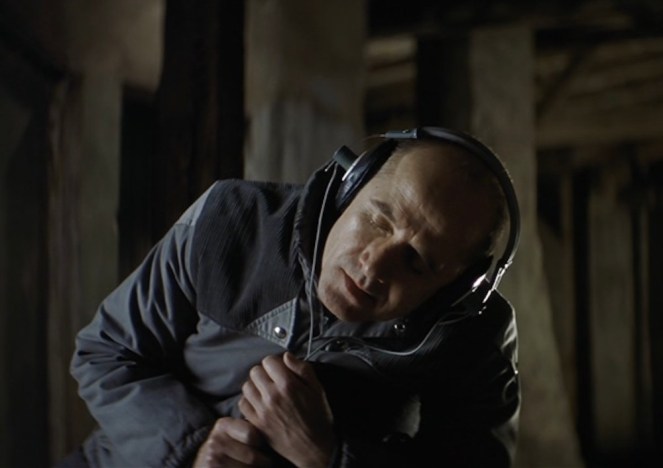
After this, Wiesler goes home and calls a prostitute. He’s so lonely, he asks her to stay a while but she has another customer. He returns to Dreyman’s apartment and wanders around, touches the bed, and then goes home again. Later it transpires that he also stole a book of poetry by Bertolt Brecht and he lies on the sofa, transfixed, reading the poems.
“One day in blue-moon September silent under a plum tree I held her, my silent pale love in my arms like a fair and lovely dream. Above us in the summer skies was a cloud that caught my eye. It was white and so high up, and when I looked up, it was no longer there.”
Until this moment, the Stasi captain has maintained his blank demeanour, showing barely any feeling or emotion. Now his inner life opens up and he begins to feel and find meaning in music and art. He’s touched by the love that Dreyman and Christa share and he starts to become more human, inspired into a new morality.
When Dreyman hears that Jerska has hanged himself, he plays Sonata for a Good Man on the piano to honour his friend, and says to Christa:
“You know what Lenin said about Beethoven’s Appassionata: ‘If I keep listening to it, I won’t finish the revolution.’ Can anyone who has heard this music – I mean truly heard it – really be a bad person?”
Wiesler listens to the music and cries, overwhelmed by emotion. It acts as a challenge and a question. Is he a good man or a bad man?
On his way home, he meets a little boy who says his father says the Stasi are bad men who put people in prison. Wiesler is about to ask the name of the boy’s father but then stops himself. He also begins to interfere with the surveillance and even approaches Christa in a bar, posing as a fan to encourage her to be true to herself and not give up on her art.
Christa knows it’s not that simple. When Dreyman pleads with her to leave Hempf and have more faith in him, she replies:
“Don’t I need this whole system? … you get in bed with them too. Why do you do it? Because they can destroy you too, despite your talent and your faith. Because they decide what we play, who is to act, and who can direct.”
But thanks to Wiesler’s intervention, she does leave Hempf and Dreyman finally finds the courage to act. He begins to write an article about the rising suicide rates in East Germany. There are no real figures because the State stopped counting in 1977 and they don’t care about what they call “self-murderers”.
“But it has nothing to do with murder. It knows no bloodlust, no heated passion, it knows only death, the death of all hope.”
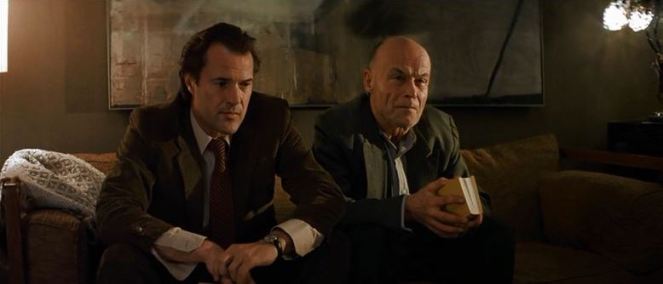
With the help of his friends, Dreyman arranges to publish the article in Der Spiegel using a smuggled typewriter that he hides under the floorboards. Wiesler listens as the plot unfolds and fabricates his surveillance reports to provide cover for Dreyman. But then Hempf has Christa arrested and Wiesler has to choose between his career and protecting the couple, with tragic consequences.
A few years later, Wiesler is steaming open letters in the post room when he hears about the fall of the Berlin Wall on the radio. He walks out of the office, followed by his co-workers, and into freedom.
Later still, Dreyman runs into Hempf, the ex-Minister of Culture, at the theatre. Dreyman hasn’t written since the fall of the wall and Hempf goads him about it, saying there’s nothing to believe in and nothing to rebel against. He’s clearly missing his power and enjoys telling Dreyman about the surveillance he was under – they knew everything about him.
Dreyman returns home and finds the listening devices in the walls, and visits the Stasi research memorial to see his files. He’s amazed when they wheel out a trolley piled high with files, and realises that officer HGW XX/7 was secretly helping him.
Another two years pass and Wiesler is delivering the mail when he comes across a bookshop featuring Dreyman’s new book, Sonata for a Good Man. He enters the shop and discovers that the book is dedicated to him – in gratitude.
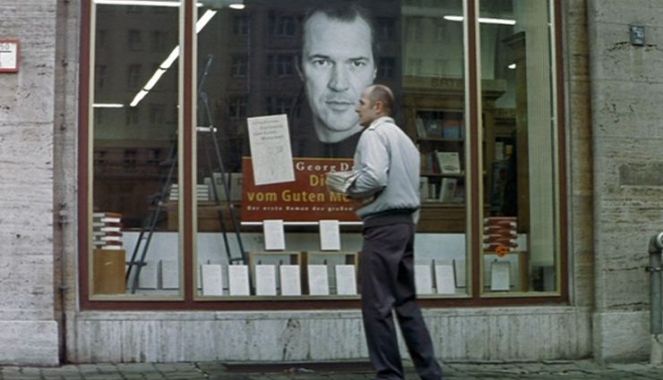
Wiesler and Dreyman both start out as believers in the system and they both become disillusioned. The catalyst for this change of heart is Albert Jerska, a man who was so thoroughly disillusioned that he couldn’t stand living within the system anymore.
As a functionary of the State, Gerd Wiesler is a grey man with grey clothes and a blank expression giving nothing away. He appears to have no feelings and no inner life and his spartan apartment reflects this inner emptiness. He’s an empty vessel, an outsider looking into the lives of others – part of the system but outside of real life, although the system spies on him too, so really, he doesn’t belong anywhere.
Wiesler has no life of his own – he is owned by the State. But then he has a crisis of conscience and compassion and chooses to go against the rules. His morality becomes self-defined and internalised rather than based on obedience to external orders. The change is subtle, a slow shift inspired by love and art, and he begins to recover his soul as a human being. He returns to himself and becomes a good man.
As a playwright, Georg Dreyman lives a seemingly full life surrounded by art and music and literature. He has a rich inner life and the love of a woman who acts as his muse and inspiration. He’s relaxed around other people, playing football in the street with the local kids. And yet his idealism makes him naïve and he doesn’t realise how limited he is by the system in which he lives.
Dreyman believes in humanity and has a kind of faith. He believes people can change and that there’s always hope. But this faith is maintained by ignoring reality and making excuses for the failures of the system. He believes he’s a good man because of what he believes – more circular reasoning – but Jerska knows better.
Jerska knows it takes more than belief to make a good man. It also takes action – but he is unable to act. The system prevents him from being true to himself as a human being and as a director. He understands that his real feelings and thoughts must be controlled and hidden, repressed and denied, and for what?
He’s more in touch with the reality of what’s going on within the system and that’s why he can’t handle it. The conformity is deadening. He feels alone – rejected by everyone within the system of control that creates nothing but death. It kills the inner life and that manifests outwardly as suicide and moral decline.
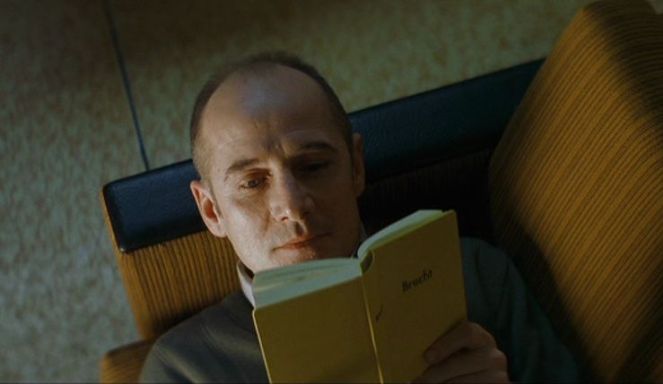
When you’re being watched, whether by other people or by algorithms, it’s not a passive experience. What is watched is changed by being watched. It reduces compassion for others and sets people against each other and breeds distrust and fear. On the surface, everyone pretends to get along – they lie to each other and to themselves. But a society run like this is devastating to the individual and no amount of idealism can disguise it. Eventually the bodies pile up and can no longer be ignored.
When the individual is destroyed by a system of control, as in communism, it also destroys creativity and the culture. But without culture, you can’t create a society. This is why artists and writers are always the first against the wall during a revolution, unless they can be co-opted by the system to reinforce its control. But real art and creativity suffer as a result.
You can’t be true to yourself or create anything meaningful if you’re always being watched because you modify your behaviour and thoughts to match what’s expected by the system. You end up becoming what you’re expected to be, not who you are. And you might not even realise that you’re doing it. You become a man or woman of the system, like Wiesler – dehumanised and inauthentic.
To become an authentic individual you need privacy and a personal life that allows for the freedom to explore, to question and think for yourself, and to create and be inspired. Only then can you develop empathy and compassion for others and come together to create a society that supports love and life.
In case you’re feeling idealistic about communism, I recommend this excellent interview with Giles Udy: the Truth about Communism
Explore more films here
Thanks for reading! If you’d like to support my work, please donate below 🍵. Thanks in advance! 🙏❤️


Well, we could say that Pluto in Aquarius is the natural antidote to the Pluto in Leo “Me” generation. So, The Collective looms as the destroyer of individual autonomy–it has made a judgement that something about individualism has gone awry and needs doing away with. Pluto is about destruction of the weakest link because its drive is toward supporting the thing that is likeliest to survive. What we might draw from that reality is that anything that can be destroyed is in fact too weak to survive, that something is inherently wrong with its structure and we are missing that salient point. What’s left is either the strongest thing, or fertile ground for new things to grow–and those two might be the same thing.
Aquarius reps Truth as the supreme arbiter, so it is friendly to science, which truth is considered verifiable in mechanistic terms. What might we say when Pluto commandeers that sign? I should expect some huge disruptions in or decimation of technology, science–an entire transformation of everything we understand to be true…a re-ordering of how one defines truth.
It’s in one’s best interest to offer alms to a God, though Pluto seems the most non-negotiable of all of them because He represents laws of Nature/Universe that quite transcend our understanding at the moment. Still, respect is required here and that means being careful about passing judgment about what Pluto is after. This is not to say it won’t be uncomfortable or even tragic, but we as humans see only a few inches in front of our face, while the Gods see from the perspective of eternity.
LikeLiked by 1 person
Unfortunately the kind of ‘individualism’ that we have these days is closer to egotism or narcissism than genuine individuality. Perhaps Pluto in Aquarius will help with that too. More on this coming on the blog next year…
LikeLike
A great blog as always, cheers …. the scary thing here is that we have seen how easily this nonsense sort of society could return…my jaw is on the floor at what ‘the man in the street’ seems to accept from gov/media ( mind you, we know what Sid Vicious said about him!!).. Day to day we are in a realm of the laughable — i feel society has yet to catch up with the actual Higher Energies of this time which are of something altogether life-embracing n nourishing…. looking forward to this Grand Catching-up taking place.. may the internet of eyes surveillance world die a lasting death
LikeLiked by 1 person