
Back in January we looked at the history of Saturn Neptune conjunctions in Aries. There were only a handful of examples so I thought it might be good to explore how Saturn works in Aries without Neptune hanging around. Saturn enters Aries on 25th May 2025 and will be there until 13th April 2028 with a bit of toggling in and out at either end.
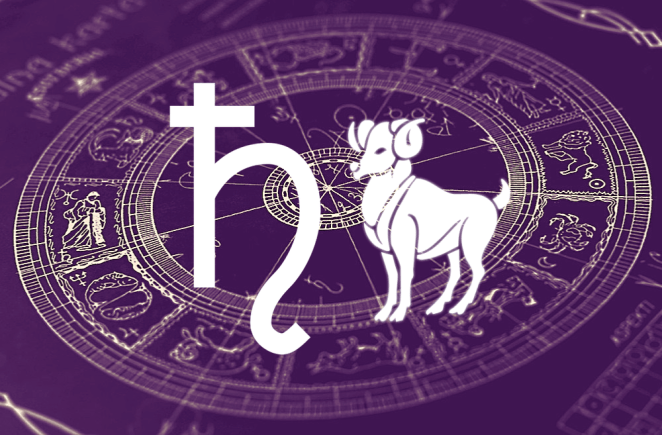
Saturn represents the principle of reality and the need for structure, boundaries and limitations. He brings stability and organisation through hard work and discipline, as well as fear and failure when the need for responsibility and authority is ignored. Aries represents new beginnings, initiative, creativity, individuals and heroes and the need for independence.
When Saturn works through the Aries archetype, we tend to see lots of war and fighting between tribes, and later between countries and empires. There are massacres and civil wars and people asserting their independence and rights in rebellions, as well as a surprising number of young kings with regents ruling on their behalf.
You would think Saturn would calm Aries down and stop all the fighting, but apparently not. As usual, it’s hard to tell how many of the wars are just business as usual and how many are the influence of Saturn in Aries. I haven’t included every war and young king because there’s just too many, but there are some interesting events that illustrate the archetype in action. I’ve also not included every transit because that would require a whole book!
Important note: the dates below aren’t precise and Saturn dipped in and out of Aries during these ranges. Please check your ephemeris for the exact dates!
6 BCE to 4 BCE
We could’ve started earlier but this was the obvious place to begin with the possible birth of Jesus of Nazareth. Did Jesus have Saturn in Aries? We’ll never know! But he did rebel against the Jewish authorities and criticised the church of the time, creating his own radical cult that ultimately grew into Christianity.

407 to 410 CE
Constantine III was declared Roman emperor in Britain in 407 and then took almost all the Roman garrisons off to Gaul and Spain to deal with the barbarians who were causing problems for the empire. Meanwhile in Britain, the Saxon raids continued, especially with the Romans preoccupied elsewhere, and the natives were getting fed up. The Britons rejected Roman laws and reverted to their local customs and eventually booted out the remaining Roman officials by 410.
613 to 616
This transit included a Saturn conjunction to Pluto which would have intensified the fighting – and there was plenty of it, as usual. During this time the Persians conquered Jerusalem and burned many churches, making off with the relics of the True Cross, the Holy Lance, and the Holy Sponge (I’m not making that up!).
There was lots of fighting in Britain between Saxon England (i.e. Germans!) and the Gaelic Britons (Irish, Scots, and Welsh). At one point Anglo-Saxon King Aethelfrith of Northumbria defeated the Kingdom of Powys in Wales and slaughtered 1,200 Christian monks at their monastery in Bangor.
Meanwhile, Muhammad started preaching his new religion of Islam publicly in 613, proclaiming that ‘God is One’ and that submission (Islam) to God was the correct way of life. He sent some of his followers to Abyssinia in 615 to escape persecution by Meccan polytheists.
731 to 733
Back in Britain Anglo-Saxon monk the Venerable Bede wrote his ‘Ecclesiastical History of the English People’, completing it in 731. The book covers the history of Christian churches in England and the conflict between Roman and Celtic Christianity, and it has played a huge role in the development of the English national identity.
878 to 881
Staying in Britain, in 879 Alfred the Great, King of Wessex, established a series of fortified villages to protect Wessex against marauding Vikings. He also created a standing army to defend the ports and built army roads, called herepaths, that were safer roads for travellers.
1201 to 1204
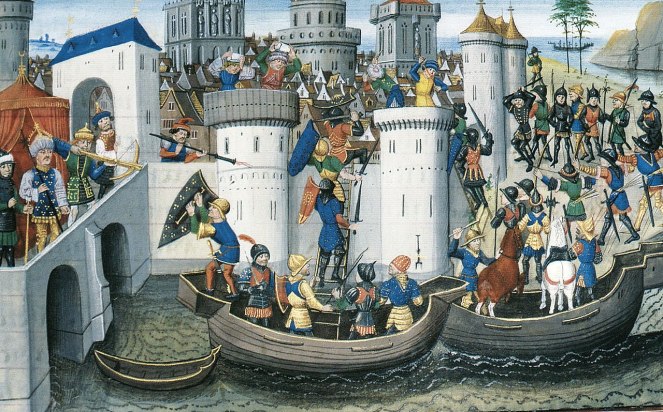
This period coincided with the 4th crusade by Christianity to recapture Muslim controlled Jerusalem. However, they got diverted to Constantinople instead and only succeeded in solidifying the East-West Schism between the churches. That schism happened in 1054 during an earlier transit of Saturn in Aries.
In the Byzantine empire an upstart aristocrat called John Komnenos the Fat tried to usurp the throne but his rule only lasted a day. He was proclaimed emperor and crowned on 31st July 1201. But the actual emperor Alexios II Angelos sent an army to overthrow Komnenos and he was decapitated by the end of the day. His head was displayed at the Forum of Constantine and his supporters were tortured.
1319 to 1322
In Spain, James of Aragon upset his father, the King, when he suddenly tried to break off his engagement to Eleanor of Castile. James said he wanted to renounce his right to the crown and take holy orders instead despite having never shown any interest before. Then he developed an abscess which he used to avoid visiting his father. Despite this, the wedding went ahead, although James refused to consummate it. He was 23 years old and Eleanor was only 12. Eventually the King gave in, annulled the marriage and let him join a monastery.
In June 1320 the Shepherds’ Crusade ended badly, although it started badly too. A group of people set off on a crusade from Normandy after a teenage shepherd said he was visited by the Holy Spirit who told him to fight the Moors in Iberia. The rabble marched south attacking castles, priests, lepers and Jewish communes. But when they reached Spain, they were stopped by Aragon’s forces and many were arrested and executed.
1437 to 1440
In Scotland, King James II became king at age 6 in March 1437 after his father was assassinated. His nickname was ‘Fiery Face’ due to a prominent red birthmark on his face – a great example of a young king with Aries characteristics.
1584 to 1587
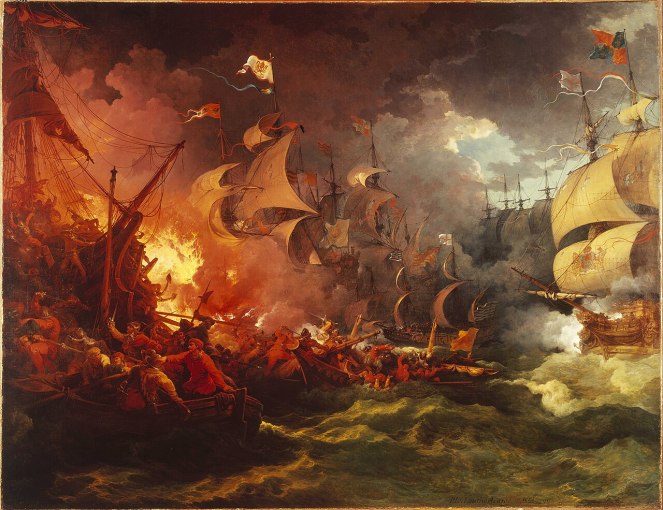
This period coincided with the reign of Elizabeth I in Britain and the rise of William Shakespeare. English pirate Francis Drake was busy attacking Spanish ports in South America which triggered the Anglo-Spanish war in 1585, while Sir Walter Raleigh was trying to establish the first English colony on Roanoke Island in North America.
This was after the Reformation so there was lots of fighting between Catholics and Protestants. A civil war broke out between them in France in 1585, called the Eighth War of Religion, and the same year 20 Catholic priests were “perpetually banished” from England and transported to France. Catholic Mary Queen of Scots was put on trial in 1586 for plotting to assassinate Elizabeth I and take her place, and she was beheaded in 1587.
Many Catholics were tortured in England by having heavy stones slowly piled on top of them until they either confessed or died. This method was used in 1586 against Margaret Clitherow who was pressed to death for refusing to enter a plea. She was Catholic and her husband was Protestant and she rebelled against the rules, refusing to attend church services and protecting Catholic priests by hiding them in a priest hole in her house. She was killed while pregnant with her 4th child.
Over in the Dutch Republic, the leader William of Orange or William the Silent, became the first head of state to be killed with a handgun when he was assassinated. He had originally served the Habsburgs but then became unhappy with the centralisation of political power and rebelled and joined the Dutch uprising.
1790 to 1793
Jumping ahead, this period coincided with the French Revolution which started just before this in 1789 during Pluto in Aquarius. The people asserted their sovereignty when a constitutional monarchy was declared in 1791 and the First French Republic was declared in 1792 (when Saturn had dipped into Taurus). King Louis XVI was stripped of his title and put on trial for treason and executed by guillotine in 1793.
Meanwhile the newly formed United States of America was busy getting itself organised and passing various acts and laws. The capital was named Washington DC after the first President.
Thomas Paine published Rights of Man in two parts in 1791 and 1792, arguing that political revolution is permissible when the government doesn’t protect the natural rights of the people. The Declaration of the Rights of Woman and of the Female Citizen was written by French playwright Olympe de Gouges in 1791, and Mary Wollstonecraft’s A Vindication of the Rights of Woman was published in 1792.
1937 to 1940
Jumping ahead again to the 20th century transits, this period coincided with a huge number of wars and general mayhem, including the Second World War. The Spanish Civil War started just before this in 1936 and Franco took control of the country as dictator in 1939. In Italy fascist dictator Mussolini gained equal power over the military alongside the king in 1938.
The Great Purge in the Soviet Union continued, having started in 1936 when Stalin began consolidating his power, and it peaked in 1938. Huge numbers of people were accused of crimes against the State and either executed or sent to the Gulag. In the end, Stalin had the leaders of the purge executed as well.
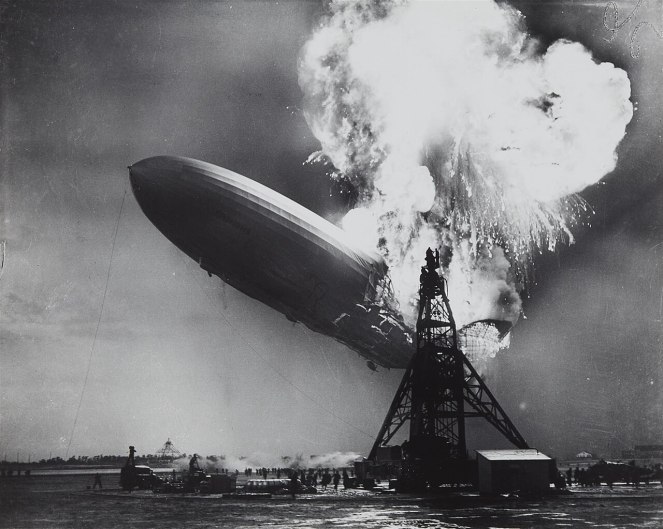
In 1937 the Hindenburg disaster happened when an airship carrying passengers was destroyed. Its hydrogen caught fire when it was attempting to dock with its mooring mast and it exploded, killing 35 people. The disaster brought an end to the airship era.
In the US Roosevelt gave his Quarantine Speech in 1937 which called for an international ‘quarantine’ against the lawlessness that was breaking out all over the world. It was aimed at Nazi Germany, Japan (who had invaded China), and Italy, but the speech received pushback from the isolationists in the US.
The speech had no effect and Hitler took direct control of the German military in 1938 who then occupied Austria. Hitler was made Time magazine’s ‘Man of the Year’ in 1938, giving his ego an unnecessary boost. The following year Germany invaded Poland and started WW2 on 1st September when Saturn was in Taurus. They divided and annexed Poland once Saturn got back into Aries and the war continued.
1967 to 1969
This transit coincided with the Uranus Pluto conjunction which intensified the usual wars and fighting and stirred up lots of civil unrest and general upheaval. The Vietnam war was still going, having started in 1955, and Martin Luther King Jr denounced it in 1967 and was assassinated in 1968, along with Robert F Kennedy.
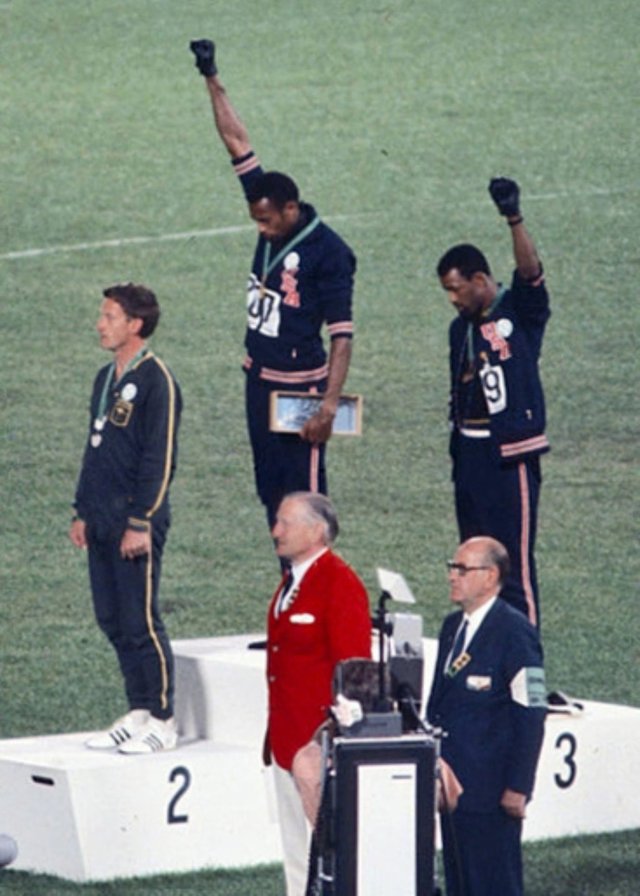
Political protest also made it to the Olympics in 1968 when two African American athletes, Tommie Smith and John Carlos, raised their fists in a Black Power salute after winning gold and bronze medals in the 200 meters. But time ran out for Che Guevara in 1967 when the guerrilla leader and Marxist revolutionary was finally captured in Bolivia and executed.
In the UK the Commonwealth Immigration Act was introduced in 1968 restricting the rules on who could live in the country. Later it was revealed that the legislation was deliberately aimed at “coloured immigrants.” Enoch Powell capitalised on the mood when he made his infamous ‘rivers of blood’ speech against immigration and opposed the Race Relations Act which criminalised discrimination.
Earlier in the UK the broadcasting of offshore pirate radio was made illegal in 1967 but Radio Caroline defied the law and continued to play records. The station had started operating in 1964 to circumvent the control of popular music broadcasting by the record companies.
Censorship was also happening in the US and in 1967 Jim Morrison and the Doors caused a ruckus on the Ed Sullivan show when they performed Light My Fire. Morrison sang the word ‘higher’ despite being asked not to – such a rebel! – due to it being a possible reference to drugs. He was also arrested on stage later that year for indecency and attempting to start a riot.
Meanwhile, Evel Knievel was trying to outdo himself by jumping over more and more obstacles on his motorbike. In 1967 he tried to jump the fountains at Caesars Palace in Las Vegas but the stunt backfired and he crashed and ended up with multiple fractures. It was the longest attempted jump at 141 feet.
Other firsts include Apollo 8, the first manned mission to orbit the moon in 1968, and the first test flight of the supersonic airliner Concorde in 1969. (Apollo 11, the first man to land on the moon was in 1969 when Saturn was in Taurus.)
1996 to 1999
The most recent transit coincided with the shenanigans of the Iraq disarmament crisis that ultimately led to the Iraq war in 2003 after this transit was over. In 1996 the US launched missiles against Iraq in Operation Desert Strike following Iraq’s attack against Kurdistan.
In the UK the fighting between Catholics and Protestants that had been going on for generations was finally running out of steam. The IRA was still active and blowing stuff up to end British rule in Northern Ireland. But multiparty talks began in 1996 which brought the Troubles to an end in 1998 when the Good Friday Agreement was signed.
The Australian government banned private possession of automatic and semi-automatic rifles in 1996 in response to the Port Arthur massacre. And the UK introduced a total ban on handguns in 1997 following the Dunblane massacre that had happened just before this transit started. In the US, the Heaven’s Gate cult led by Marshall Applewhite committed mass suicide in 1997.
Following the breakup of the Soviet Union, the EU officially recognised the Federal Republic of Yugoslavia in 1996, although it declared its independence in 1992, and later became Serbia and Montenegro. The European Central Bank was established in 1998 and the euro currency was launched in 1999 – so they’re both about to have their first Saturn return.
The UK officially handed the sovereignty of Hong Kong back to China in 1997. And the same year Scotland voted for the creation of a Scottish Parliament with devolved powers from Westminster in London. Wales followed suit and voted for the creation of a National Assembly for Wales the same month.
In 1996 the New Zealand government agreed to pay compensation for the loss of land suffered by the Māori population in the 19th century. And the same year Frederik de Klerk, the former State President of South Africa, officially apologised for the crimes committed under Apartheid at the Truth and Reconciliation Commission.
In the UK Diana, Princess of Wales, finally gained her freedom from Charles when they divorced in 1996. But the royal family didn’t let her live long. She died in a car crash in 1997 following a high-speed pursuit by paparazzi in highly dubious circumstances.
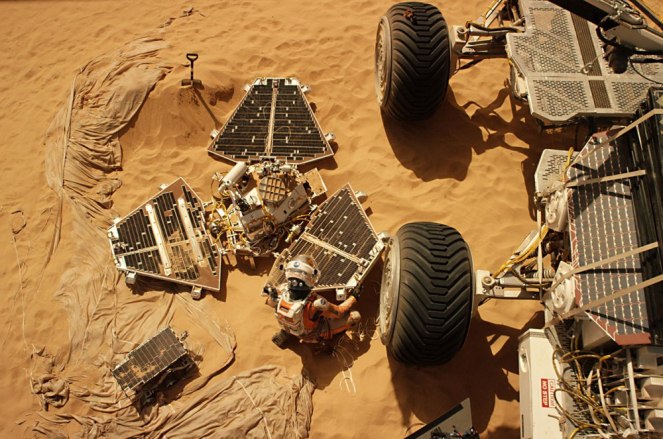
Meanwhile, NASA’s Pathfinder space probe was launched in 1996 and landed on Mars in 1997. Also in 1997 Andy Green set the first supersonic land speed record for the ThrustSSC jet car at Black Rock Desert in Nevada. He broke the sound barrier with an average speed of 763 miles per hour.
Finally, the satirical and anarchic South Park animated TV series had its profanity rich premiere in 1997 with an episode called Cartman Gets an Anal Probe.
Next time we’ll explore how Saturn in Aries works in your natal chart…

 Jessica Davidson
they hadnt seen a lady like diana that they followed her till her death, she mustve reincarnated as a paparazzi herself
LikeLike
Wow – great detail about the title of the first Southpark episode – They certainly started as they meant to go on…. no messing around there !
LikeLiked by 1 person