
In previous posts we’ve explored the archetypes and history of Pluto in Aquarius, as well as its personal effects. Another way to get a feel for how this transit might work is to look at how the archetypes express themselves through mythology and storytelling. So in this post, we’ll explore some representative films and TV shows that combine the energies of Pluto and Aquarius.
For Aquarius we can include stories about society, community, politics, rules and social norms, revolution, the creation of utopias and dystopias, ideas about humanity, originality and independence, as well as invention, technology, science fiction and space. For Pluto we can include stories about the use and abuse of power, obsession, spies, criminals and underground activities, disasters and death.
For Pluto in Aquarius we can add stories about the wielding of power using technology and science, the transformation of society through political revolution and fanaticism, power struggles between individuals in groups and communities, and the dark side of technology.
The following examples of Pluto in Aquarius on film are some of my favourites – Expect SPOILERS!

Individuality and Community
This category includes films about community and society in general, the interaction between the individual and the community, and political revolutions, whether fictional or historical. Examples include: Doctor Zhivago, Gandhi, Persepolis, The Prisoner (TV series), Schindler’s List, Selma, Spartacus, V for Vendetta, and Witness, plus:
The classic It’s A Wonderful Life about a man who learns how much his individual life matters to his community of friends and neighbours. The story follows George Bailey who gave up his dream to travel the world to run the family loan business. He saves lives, helps the town to grow, and supports other people’s dreams. But when a bundle of cash is stolen, George is blamed, driving him to suicide.
An angel intervenes and saves his life and shows George what the town and his friends would’ve been like if he had never been born. Horrified, he returns to his life to face the music and discovers that the people of the town have raised enough money to cover the loss. The angel sends George a Christmas present with a note saying:
“No man is a failure who has friends.”

For Saturn in Pisces we explored the political thriller The Lives of Others about the communist regime in East Germany and it also works well for Pluto in Aquarius. Read more on The Lives of Others here.
Another political movie is The Wind That Shakes the Barley about the Irish fight for independence from Britain during the War for Independence and the Irish Civil War early in the 20th century. It reveals how individuals become radicalised when faced with impossible and unfair conditions.
The story follows two brothers who join the IRA to fight the brutality of the British colonisers. Damien starts out as a doctor and is about to leave Ireland to work in London. But after witnessing the execution of a friend for refusing to say his name in English, he joins the fight for freedom and socialism. The brothers end up on opposite sides of the conflict with tragic consequences, as Damien writes in his final letter:
“It’s easy to know what you’re against, quite another to know what you are for.”
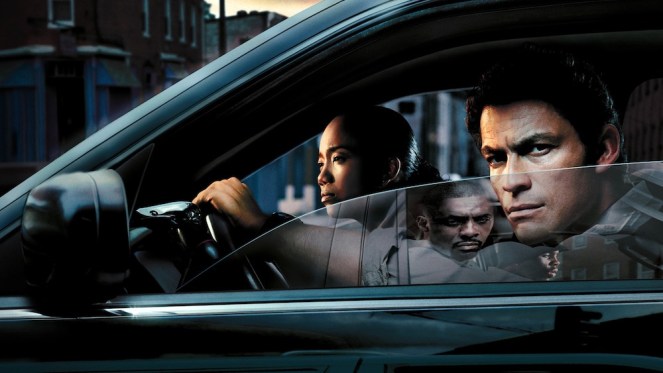
Next, we have The Wire, a TV series set in Baltimore that explores how individuals work within various institutions in the city, from the bottom to the top. Over five seasons it covers the police and drug trade, the port, city government, schools, and the local newspaper, and reveals how the system works to preserve itself against the interests of the people trapped within it. It’s also relevant for Pluto in Capricorn as it shows the corruption of the hierarchies that everyone has to deal with.
The show is set at the turn of the millennium and it’s fun to watch the obsolete tech and characters struggling with manual typewriters, pagers and flip phones. As the seasons unfold, the technology gradually changes to include the internet but doesn’t quite make it to smart phones. There are too many characters to mention but one running theme is the desire to escape the system and be freed from the rigged game. Most remain trapped, but as Omar Little wisely says:
“At the end of the day, the king and pawn go back into the same box.”
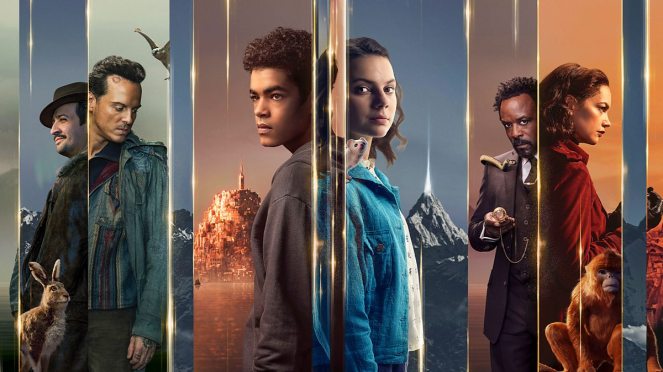
We go from gritty realism to fantasy bonanza with His Dark Materials, the TV series based on the books by Philip Pullman. It takes a gnostic view of reality that incorporates multiple universes and a substance called Dust which the priests of the Magisterium believe is associated with sin. The novels are quite philosophical and the TV series simplifies things a bit but is otherwise a faithful rendition, although if you want to go deeper, you’ll have to read the books.
The story follows Lyra and her daemon, an animal that represents her soul, as she explores the worlds and meets various friends, including Will, a boy from our reality who doesn’t have a visible daemon. Together they join the rebellion against the Authority, a mad fallen angel who has crowned himself God.
His Dark Materials is packed with interesting ideas about the fight for free will and liberation from control and shows the importance of being allowed to determine your own path through life even as you work with others towards a common goal. Here is Lyra’s father, Lord Asriel revealing his heretical discovery of Dust:
Utopia and Dystopia
You’re spoilt for choice for films about utopia and dystopia, and the list includes many classics of the science fiction genre, such as 12 Monkeys, Brazil, Escape from New York, The Hunger Games, Invasion of the Body Snatchers, Logan’s Run, Metropolis, Planet of the Apes, Snowpiercer, Soylent Green, The Time Machine, and so many more.
But we start with Children of Men, a film we explored in 2021 which becomes more relevant by the day. The story is set in a dystopian future when the human race is facing extinction due to a lack of new births. The world has descended into chaos and the people have lost hope for the future.
Theo sleepwalks through his days but then becomes protector of a young pregnant woman. He must get her across the country to a research boat moored off the south coast of Britain and stop her baby falling into the wrong hands. It’s an extraordinarily powerful film, packed with symbolism and shocking revelations, with a bittersweet ending. Read more on Children of Men here.

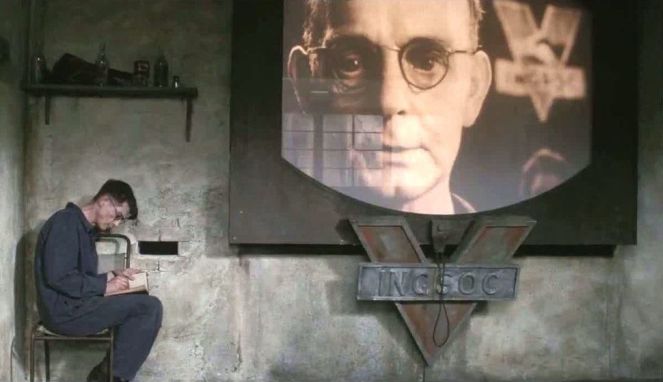
Next, we have Nineteen Eighty-Four which is based on the novel by George Orwell and set in a dystopian Britain in 1984. The story follows Winston Smith who works for the Ministry of Truth and Party leader Big Brother who keeps everyone under constant intrusive surveillance. Winston tries to hang on to his individuality and sanity as reality is rewritten around him, but ultimately fails.
After being caught having an affair, Winston is tortured by the Ministry of Love to stop him committing thought crimes. The torturer tries to make Winston disbelieve his own eyes, saying there are five fingers being held up when there are only four. Winston’s mind breaks and he loses all sense of himself as an individual and finally comes to love Big Brother.
Next, we have the TV series Westworld, based on the film of the same name, which can be thought-provoking as well as confusing and downright rubbish. Most of the best ideas are in the first season but it suffers from dodgy metaphysics around consciousness based on reductionist materialism and its tendency for nihilism. But there’s some interesting ideas and great moments of revelation, particularly when we discover the true nature of some of the characters.
The story starts in a Wild West theme park where the hosts are androids programmed to cater to the human visitor’s every whim and desire. Each android has a set of storylines that it follows until some of them start waking up and realising what they are and how they’re being exploited. As the seasons unfold the androids go to war against the humans for the right to self-determination. By the fourth season, the tables have turned and the androids control humanity by programming storylines for them. Some of the humans manage to escape control and, well it just goes on and on… The original film was more fun.

Technology (the dark side)
Again, we’re spoilt for choice for sci-fi classics, although I’ve put the space movies in their own category below. Here we have films like Black Mirror (TV series), Frankenstein, Ghost in the Shell, Her, Iron Man, Jurassic Park, Minority Report, Never Let Me Go, Orphan Black (TV series), The Terminator, and tons of others.
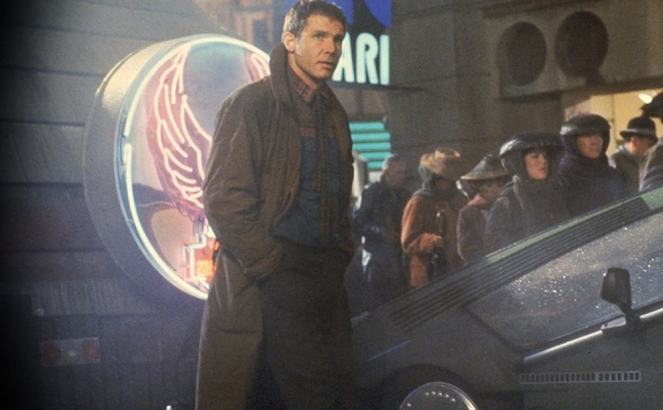
But we begin with the best film about humanity and robots, the original Blade Runner (Director’s Cut, not the one with the voiceover!). Based on the novel by Philip K Dick, the film is set in a dystopian future and explores the nature of life and humanity, slavery and freedom, corporate control and surveillance, and the loss of nature.
The story follows Rick Deckard as he hunts replicants, bioengineered robots who look human but can be detected using a series of questions about morality. He runs into various replicants that challenge his ideas about humanity, including his own. The film has layers of symbolism and meaning and is deliberately ambiguous, opening up endless debate on what a human being is, enough for a two-part write up. Read more on Blade Runner here (part 1 of 2).
Next, we have another classic The Matrix, a cyberpunk dystopia about a simulated reality and the struggle to escape it. The film and its sequels explore the nature of reality and ask philosophical questions about consciousness, humanity, freedom and free will, although the answers it offers may not be as deep as you think.
The story follows Neo as he takes the red pill that breaks him out of the simulation that he’s been living inside without realising. He must choose between illusion and truth without knowing what the truth even looks like – a leap of faith that takes him into a new reality. In the process he develops self-awareness and mastery of his own mind which allows him to manipulate reality and become free – sort of. Read more on The Matrix here.

Space (the final frontier)
Here we find all the classic space movies and many long-running franchises that have been milked to death over recent years, like Star Trek and Star Wars, plus films like 2001: A Space Odyssey, Capricorn One, Contact, Gattaca, The Martian, Moon, Silent Running, Sunshine, The X-Files (TV series and movies), and endless others.
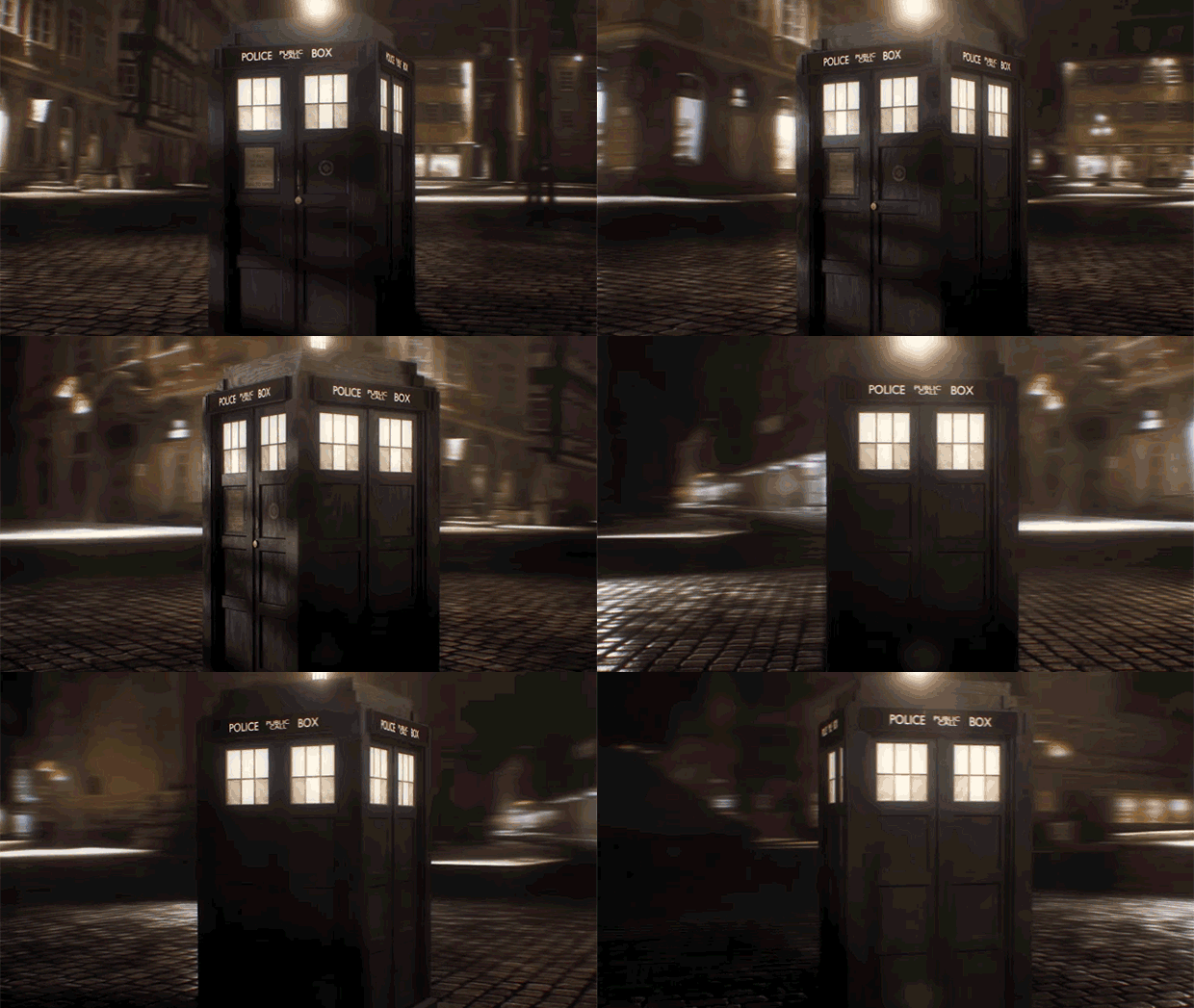
But we begin with a classic long-running TV series about an alien with a blue box: the one and only Doctor Who. The Doctor is a Time Lord who travels in a TARDIS that looks like an old British police box which is larger on the inside. He (or she) travels the universe with various companions, usually human, having adventures and helping people out of sticky corners, righting wrongs and occasionally committing genocide.
Multiple actors have played the Doctor because the character regenerates whenever he/she dies. The next iteration will be a familiar face (David Tennant) but then we move into new territory with the first black Doctor played by Ncuti Gatwa. Jodie Whittaker was the 13th Doctor, the first female to play the role, who unluckily ran into some quite poor writing.
The show is usually great fun, with some silly episodes interspersed with more thought-provoking material. The best seasons tend to have overarching storylines that go deeper into the characters, and depending on the writers, it explores ideas about humanity, morality, life and death, and time. Despite the hoo-ha about ‘hiding behind the sofa’, it’s not that scary (even if you’re a child), unless you encounter the Weeping Angels, in which case, Don’t Blink!
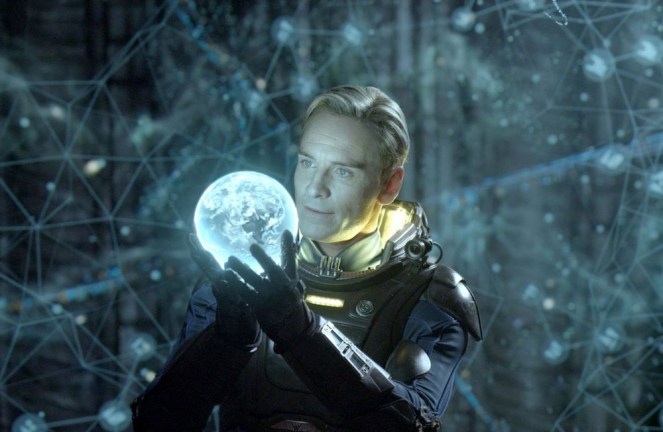
Next, we have Prometheus, a prequel to the Alien franchise, which explores the origins of mankind and the idea that our evolution has been influenced by contact with ancient aliens. Other themes include the ethics of creation and destruction and what it means to be human. The film is based on a gnostic creation myth and the quest for perfection using technology that goes horribly wrong.
The story follows the crew of the Prometheus who are searching for the beings who created humanity. They’re assisted by David, an android who is obviously up to no good but it’s not clear why. It’s his actions that endanger the crew when he re-awakens a dormant bioweapon that brings events to a terrible climax. The film is packed with symbolism, enough for another two-part write-up. Read more on Prometheus here (part 1 of 2).
The events of Prometheus set up what comes next with the follow-up film, Alien: Covenant which explores the nature of life and creation and the future of humanity, rather than its past. David also appears in this movie and drives the action with his mad scientist experiments as he succeeds in creating the ultimate weapon: the Alien monster from the franchise.
The story follows the crew of a colony ship, the Covenant, on its way to a new home planet. But they’re lured into a trap on the home world of the aliens from the previous film by the now deranged android who is looking for new hosts. David is a piece of technology created by humans that has created a life form designed to destroy humanity – a clear warning about our addiction to technology and its destructive effects. Read more on Alien: Covenant here.
Finally, we have the ultimate space epic, Battlestar Galactica, the re-booted TV series about the battle between humans and Cylons set in a distant star system. Following an attack on the Twelve Colonies, the human survivors set out into space to search for a new home, the thirteenth colony known as Earth. We’ll explore this series in more detail here.
There are many more films we could include for Pluto in Aquarius. Add your favourites in the comments below…
Next time, a deeper look at the epic world of Battlestar Galactica…
More on Pluto in Aquarius
Thanks for reading! If you’d like to support my work, please donate below 🍵. Thanks in advance! 🙏❤️

 Jessica Davidson
Hello!! I think Transcendence, from 2014, it’s a great Uranus in Taurus and maybe Pluto in Aquarius kind of film. With a healthy amount of Venus and Neptune in Pisces. So, very appropriate for these days. If you haven’t seen it, it is a really good movie. Best Regards!!
Rodrigo.
LikeLiked by 1 person
Reblogged this on litebeing chronicles and commented:
Please read Jessica’s excellent piece on entertainment that reflects the Pluto in Aquarius theme. Can you feel the shift from Capricorn to Aquarius yet?
LikeLike
Jessica, this is brilliant! I would include the TV shows Brave New World and Upload which cover Pluto and Aquarius well. Maybe the Sopranos too because of how power and manipulation impacts systems and the greater society ( capitalism, class structure, etc).
I am reblogging this so more can see your post.
Love love love film, tv, and astrology and I am a big sci fi fan.
peace,
Linda
LikeLiked by 1 person
I think of The Sopranos as being more about family but it’s such a long series that it probably covers all those themes too – so yes!
I haven’t seen Upload or Brave New World – the book version of Brave New World certainly fits.
LikeLike