
A few years ago I began researching osteoporosis after being diagnosed with the so-called disease. In the last couple of posts we’ve explored problems with the diagnostic scans and whether the drugs that are prescribed by doctors work as advertised (clue: they don’t!). In this final post we’ll explore the symbolism and spiritual causes of osteoporosis and look at some treatment options that might actually help to build stronger bones.
In astrology, the bones are ruled by Saturn who rules Capricorn, associated with the knees and bones in general, and Aquarius which is associated with the shins and ankles. My natal Saturn is in the 3rd house which rules the hands and arms, and when transiting Saturn was conjunct Pluto in Capricorn in my 12th house, I broke my wrist, leading to my diagnosis of osteoporosis.
Along with bones, Saturn represents structure and the reality principle, as well as authority, responsibility, time, old age, wisdom, and death. There’s a lot of overlap with the symbolism of the skeleton which gives your body form and structure and support, protecting inner organs and allowing you to move around.
Although bones are associated with death, they’re not actually dead themselves but are a living tissue, constantly remaking themselves, dying and being reborn. Your skeleton is a crystallisation of your energy and movement, giving structure to all your bad habits as well as your good ones – the physical form of your karma and memory built over time – the foundation and core of your being.
Bones ground you in physical reality and represent your essential core, the truth that endures over time. To have old bones is to have an old soul, and to know something in your bones is to know it deeply as wisdom. To be stripped to the bone is to reveal a long-hidden truth or insight beyond the superficial.
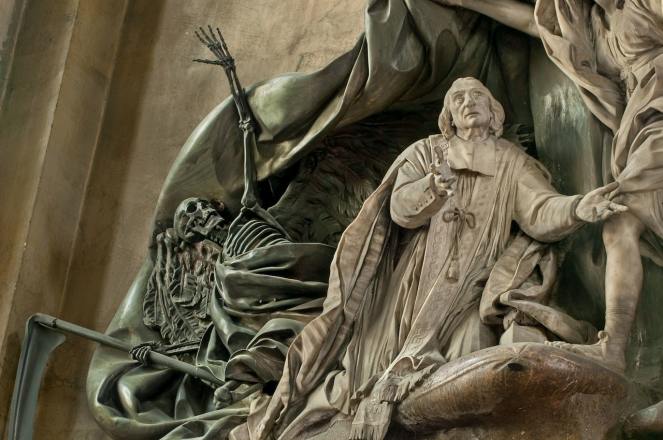
The skeleton symbolises death and the impermanence of life but also points towards eternity and the survival of the soul after death. This is because the bones don’t decay like the fleshy parts of the body and they can last for millions of years in the right conditions. The Death tarot card depicts a skeleton with a scythe symbolising the harvest of the soul and the promise of rebirth into a new form. It stands for the continuity of life and never-ending change and transformation.
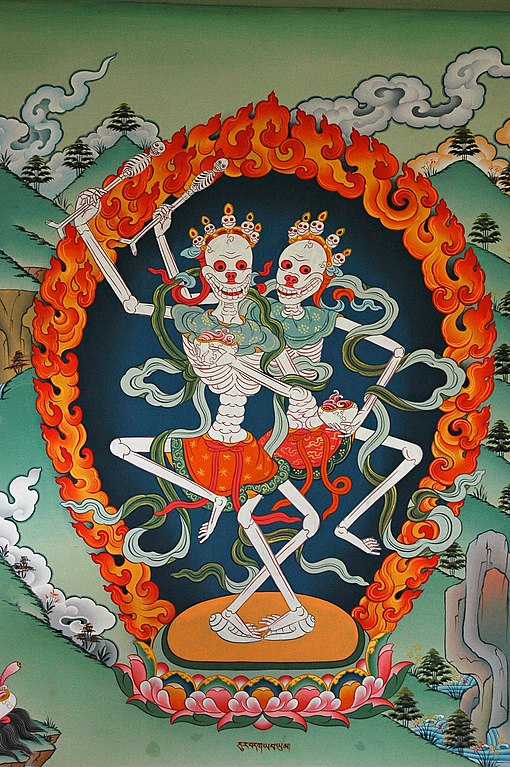
Bones are often used for healing in shamanic rituals, such as Chöd in Tibetan Buddhism which uses a skullcap and thighbone to prepare a tantric feast. The wrathful deities of Vajrayana Buddhism have skull necklaces that represent emptiness, and they help practitioners to see through the illusion of maya, in a similar way to Kali in Hinduism. For example the Citipati are protector deities depicted as two dancing skeletons which represent eternal change.
Symbolically speaking, we could say that bone fractures represent weakness and a loss of strength and perhaps also authority, as well as shaky foundations and a lack of wisdom. The same applies to osteoporosis which represents time slipping away and the dissolution of power and strength, as well as a lack of self-support and nourishment. It could also represent feeling overwhelmed by too much responsibility and supporting others to the detriment of yourself.
Louise Hay (in Heal Your Body) says that fractures are caused by rebelling against authority, which doesn’t make much sense to me, unless you’re avoiding taking on responsibility. She also says that bone problems can be related to a loss of mental mobility, a kind of inner rigidity that brings life to a stop. And the bone loss of osteoporosis means you feel like you have no support in life.
This is similar to the comment made by Caroline Myss in The Creation of Health where she says osteoporosis is related to a reduction in the life force so the body stops moving and disintegrates:
“This disease is brought about through the gradual diminishing of the energy required to generate life. The business of living becomes more and more demanding and exhausting. Eventually, all movement, both inwardly and externally, is brought to a halt. More than anything else, this illness is associated with feeling that life is just ‘too much of an effort’, and as such, the physical body begins to feel and act as though it were chaff needing to be hauled. Becoming immobile is a natural response to this type of exhaustion.”
This giving up on life is often seen in the elderly who are more prone to osteoporosis and fractures due to impaired balance and increased falls. There may be many reasons for bone loss in the elderly, including malnourishment, medications, and being sedentary, but the worst may be a sense of being abandoned and forgotten so they give up and wait to die.
Those who are diagnosed with osteoporosis earlier in life may not be this bad but there are other ways to undermine your life force. Not supporting yourself can manifest as not getting enough rest or exercise, eating a poor diet, lack of self-acceptance, negative or limiting beliefs about what you can achieve, and struggling to support yourself in terms of providing for yourself and your family.
Some of these issues may be down to practical problems that just need a little attention, but there could also be emotional blocks that are holding you back. You may feel unable to accept your own strength and authority and struggle to stand up for yourself. Stuck feelings like fear, anger and resentment can drain your energy and create depression, making you more likely to give up on yourself and become immobile.
Mike Shreeve shared some interesting information about German New Medicine in this comment which talks about emotional shocks to your self-esteem that can trigger illness and disease. You can read more here: Rethinking Osteoporosis
There’s also lots of useful information on Ravenstar’s Healing Room blog covering the metaphysical causes of knee and joint pain, as well as the bone loss in osteoporosis, and the dangers of spiritual addiction and escapism and its effect on the body.
As a spiritual practitioner you can become ungrounded and spaced out if you don’t have a strong foundation for your life. You may become addicted to transcendence and bliss, floating away with the fairies and losing touch with reality. This may be caused by an unbalanced practice – too much meditation and not enough focus on the body – or by spiritual bypassing and avoidance of the harder side of life, i.e. too much Neptune and not enough Saturn.
This negative attitude towards the body may be due to misunderstandings of spiritual practice driven by self-hatred and seeing the body and physical world as fallen and to be transcended. But this desire to escape the world is really a fear of life and an avoidance of risk and suffering.
You may also be too focused on the higher chakras and lose touch with the lower ones, perhaps due to traumas, emotional blocks, or denied needs, or simply from neglect. This can make you energetically top heavy and your life force will slowly drain away. This can happen if you’re very intellectual as well, spending too much time in your head thinking and not enough time in your body moving around.
The bones and skeleton are related to two specific chakras: the base and the crown. The base chakra is about feeling safe in the world and being grounded in your body, while the crown chakra is about your ability to trust life and have faith.
If you feel unsafe and unsupported, you’re more likely to shut down, limit yourself, freeze in fear and become internally rigid and fossilised. This may be caused by a shock to the system, emotionally or in practical terms, as well as inner conflicts that you can’t resolve and the avoidance of pain or change. A negative attitude towards yourself and life will affect your ability to remain plugged in to the life force leading to exhaustion and loss of faith.
On a personal level, I can relate to a lot of this. There have been times when I’ve given up on myself, fallen into depression and lost my direction in life. This was usually triggered by periods of ill-health that sapped my energy, and I’ve probably used spiritual practice as an escape as well as a crutch too many times.
Several years ago I knew I was running away from myself and the changes I needed to make and then landed on my face and broke my wrist. At 49, I could suddenly see how frail I could become if I didn’t take better care of myself as I aged into my fifties. It would be so easy to slip between the cracks and disappear.
Although I dispute my diagnosis of osteoporosis, I don’t doubt that my bones are thinner than they should be for someone my age, thanks to an early menopause and colitis that left me malnourished and weakened for several years. So the osteoporosis represents a wake-up call for me to get off my arse and rebuild my inner strength and resilience and create a stable foundation grounded in my body and its real needs.
Osteoporosis Treatment Options
Obviously, prevention is better than the pharma treatment on offer because it’s easier to prevent bone loss than to rebuild it after loss. The old adage: ‘Use it or Lose it’ is painfully relevant for osteoporosis, and almost every other lifestyle disease. Your body will literally fall to pieces if you don’t look after it. If you’re young, you might not believe me – you feel invincible and unstoppable! – but that will change as you get older.
If you’re already losing bone, you’re not f**ked, despite the fear-mongering of the doctors and drug pushers. The main thing is to be active and eat well. You can rebuild bone but it will take effort and time – of course, says Saturn!
Bones need to be put under strain to be rebuilt (or remodelled), but too much strain can lead to a fracture. So you’ll need to devise a workout routine that’s ideal for you based on your particular risk level and personal condition. If you overdo it, you could hurt yourself, so it’s best to aim for a little and often – you can work your way up to longer sessions as you get stronger.
The remodelling process of building bone works through resistance against gravity and requires movement and weight. This is why astronauts have problems with bone loss due to weightlessness in space. The general advice is to avoid being sedentary and to do both weight-bearing exercise and strength training in equal amounts.
Weight-bearing exercise includes walking, running, climbing stairs, jumping and dancing, but not swimming or cycling. The last two are good for increasing core strength and help with balance so they’re worth doing anyway. Walking is also worth doing for cardio and general fitness as well as for your bones. You can carry a weighted backpack, or strap weights to your ankles and wrists to give your bones more of a workout.
Strengthening your back and improving your posture is also important. And don’t stare at your phone when walking, shoulders hunched like a zombie – you WILL give yourself serious back problems later in life. Stand up straight and don’t slouch!
Strength training involves lifting weights in a way that specifically targets the bones that need to be rebuilt: the wrists, back and hips. It also includes doing things like push-ups and squats, or working with a resistance band. You don’t need to go to a gym to do this – unless you want to – and it can easily be done at home.
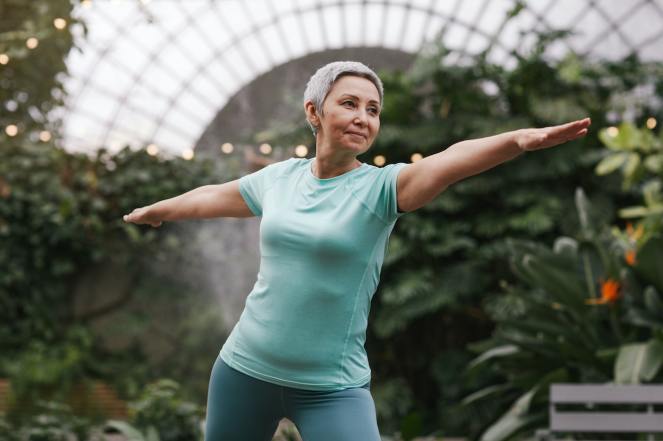
You may also like to do exercises that improve your balance, such as Tai Chi, Chi Kung, and Yoga. These can be adapted to suit your level of fitness, and yoga can be practised with props and extra support and you don’t have to be bendy. An interesting study in 2015 showed that practising a 12-minute daily yoga routine reverses osteoporotic bone loss. This is much better than taking drugs, as they say:
“The ‘side effects’ of yoga include better posture, improved balance, enhanced coordination, greater range of motion, higher strength, reduced levels of anxiety, and better gait.”
All of these effects help to reduce fractures by reducing the number of falls. The poses in the study targeted the spine and hips, and each pose was held for about 30 seconds. (see the paper for the poses used)
“By pitting one group of muscles against another, yoga exposes bones to greater forces and, therefore, might enhance bone mineral density (BMD) more than other means.”
The study showed only tiny improvements were made to the bone density of the participants, but this just means you have to keep doing it for a long time. Being consistent and practising every day for at least 12 minutes will make a real difference over time, not just to your bones but to your general health and wellbeing too.
To summarise, you need to do the following at a minimum:
- 30 minutes weight-bearing exercise a day, such as walking
- 30 minutes strength training a day, such as weights and/or yoga
Or you can lump the strength training together into longer chunks and do it several times a week for 210 minutes in total – so three sessions of 70 minutes every week would cover it.
You can do the same with the weight-bearing exercise as well, but a small amount of exercise every day is good for you and easy to fit into a busy schedule. You can even break these down into smaller chunks of 10 minutes each and spread them through your day – whatever works for you. But most importantly, pace yourself and get good advice from a professional.
As to diet, there’s lots of advice online, but the obvious thing is to cut the crap! Most of us eat too much processed food and sugar so you may need to make some big changes. Be careful of fad diets and don’t force yourself to eat something you don’t like just because somebody says it’s good for you.
Osteoporosis is one of many ‘diseases’ connected to inflammation in the body so you may want to eat an anti-inflammatory diet. This involves cutting out toxins and eating good quality fats by balancing your omegas 3 and 6, and you may need to eliminate seed oils completely.
It’s also worth identifying any allergens or sensitivities that are causing you problems, and make sure you’re getting a good spectrum of vitamins and minerals. To build strong bones you need Calcium and Vitamin D, as well as many others like Vitamin K, plus good quality proteins. If you’re lactose intolerant and don’t eat dairy, you’ll need a calcium supplement but this must be balanced in the right ratio with magnesium (2:1) and you need vitamin D for the calcium to be absorbed properly.
Here are some links to useful resources for osteoporosis:
- The Osteoporosis Society (UK) factsheets and booklets
- Save Our Bones articles on drugs, nutrition, exercise and more
- Doctor Schierling osteoporosis articles on inflammation
- Elaine Mansfield exercises to lower fracture risk
- Yoga with Lillah – key points to optimise bone health
- Yoga International – yoga and osteoporosis dos and don’ts
Obviously, nothing in this post should be taken as medical or health advice and you should always do your own research and talk to your doctor or specialist (if you can find a good one!).
Images: Citipati; Saint; Skeleton; Yoga
Thanks for reading! If you’d like to support my work, please donate below 🍵. Thanks in advance! 🙏❤️

 Jessica Davidson
hello I am a 60 year old male and a huge amount of what you share on exercise and escapism to avoid all the problems life throws at us makes an enormous amount of sense. I also have broken quite a few bones. I just want to thank you for freelynsharing such useful information.
LikeLiked by 1 person
Dear Jessica,
Thank you very much for these posts, as I’ve felt alone in having a similar diagnosis. Only discovered you, as I wondered if astrology could help explain what was going on in the world in recent years. Will have to catch up with your recent articles but don’t find it easy to write about this [due to my culture etc] but will say that I, too, have colitis, which I spent time trying to improve, using more natural treatments, but was eventually told I also had a premature menopause [where Drs I saw previously had dismissed the symptoms I was having, as being too young for it etc], in my 30s, and as a result of this, osteoporosis, which was the shocking part. Was immediately put on HRT [but saw that the side effects were based on much older women] & a Vitamin D and Calcium product but knew something wasn’t right, as had been taking similar bought bone supplements, in the years before, to try to prevent getting osteoporosis in the first place! The ingredients of the prescribed calcium and vitamin D product looked awful & artificial. Was also prescribed a bisphosphonate but refused to take it after reading how horrific the side effects were. Only took the HRT for a time but then had a breast cancer scare so stopped it & was then told by a Dr if I wanted the osteoporosis to get worse. I believe I’ll find a way to improve it, more naturally, as the prescribed treatments seem to do more harm than good. But really wanted to write to thank you for talking about what happened to you as I’ve felt that I was so alone in being younger and having this and not being able to talk to anyone about it, including my friends. Many thanks for this, your knowledge & advice, and for all that you do. I appreciate it.
All the best,
Missy
PS I received an email link to this and wondered what you think of this event programme? Could be useful?
https://morebonehealth.byhealthmeans.com/
LikeLiked by 2 people
Thanks for sharing your experience, Missy – menopause is such a difficult thing to go through in your 30s, I really feel for you. I hope you can find a way to rebuild your health in a positive way – it can be done!
The osteoporosis event looks great – thanks for the link. 😊
LikeLike
i think i forgot to click the thing again!!!
LikeLiked by 1 person
i want to share this wondaful affirmation,
”give thanks for unknown blessings already on their way”
native american prayer
one of the best affirmations ever, especially when finding it hard to practice gratitude and needing to get further than ”i’m grateful that it’s not as bad as it could be ”.
found in this book https://michaelmirdad.com/books/healing-the-heart-soul/
LikeLiked by 2 people