Read the new & improved version of this post: The Eightfold Path: Right Concentration
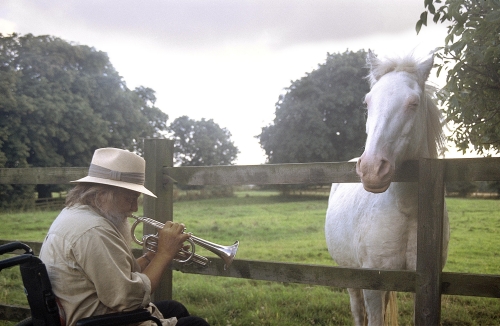
This is one of my favourite photographs. I love the way the horse looks totally blissed out by the music. It reminds me of our old family dog, a Jack Russell called Fudge. He was a music fan too. Everyday, when I practised the piano or the flute, Fudge would come in, throw himself down… Continue reading Interspecies Love
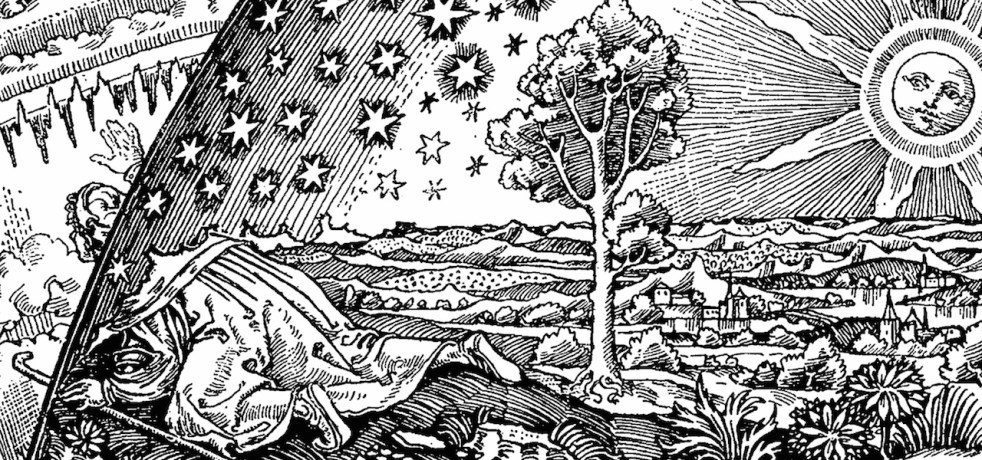
This image is a sliver of a well-known wood engraving by an unknown artist. I’ve used it as a banner for my website in the past, so thought I would look into its history and find out more about who created it. The image is often attributed to Camille Flammarion because it first appeared in his… Continue reading The Flammarion Engraving: Escaping the Crystal Sphere
On my desk I have one of my favourite quotes from the great philosopher Winnie the Pooh. It reminds me there are many ways to see things and to focus on the positive: The wind was against them now, and Piglet’s ears streamed behind him like banners as he fought his way along, and it… Continue reading Pooh Does Positive Thinking
Out of the Darkness by Steve Taylor is an inspiring collection of stories about people who have undergone the ultimate transformation – spiritual rebirth. This often occurs after intense trauma or turmoil, and Taylor expertly reveals what can happen if an individual is willing to surrender at the point of greatest darkness. Most of the… Continue reading Out of the Darkness: Book Review
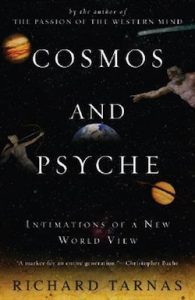
In this groundbreaking book, Richard Tarnas demonstrates the consistent correspondence between planetary alignments and the archetypal patterns found running through human history, both collectively and individually. Subtitled Intimations of a New World View, it offers a worldview and cosmology to heal the disastrous split in the Western psyche and is based on thirty years meticulous… Continue reading Cosmos and Psyche: Book Review
Self can mean many different things depending on the context or system of thought. When we refer to our self, we tend to mean something along the lines of the dictionary definition of the word: a person’s essential being that distinguishes them from others. It is also considered to be the source of our actions… Continue reading Spiritual Glossary: Self
Colin Wilson was a prolific author, philosopher and novelist, producing over 120 books on a dizzying range of subjects. This is remarkable in itself, since early in his career, his publisher advised him to quit. Thankfully he possessed an unshakable self-belief, writing on everything from serial killers and crime, to psychology, the paranormal, UFOs, and… Continue reading A Tribute to Colin Wilson: Dreaming To Some Purpose