
This year Chiron begins to move into Taurus for the first time since he was discovered 49 years ago and he’ll stay there for the next 7 years. In this post we’ll explore some of the history of these transits to get a feel for what to expect, and in the next post we’ll look at how it might affect you on a personal level.
Chiron enters Taurus on 19th June 2026 and stays until 18th September 2026 before returning to Aries for a final visit. He returns to Taurus on 14th April 2027 and stays until 19th July 2033 when he dips into Gemini, before returning to Taurus for a final goodbye on 23rd October 2033 until 5th May 2034.
Chiron was discovered in 1977 when he was retrograde at 3° Taurus. He takes about 50 years to complete one cycle so when he reaches this degree again (in 2027–28), it’ll be a kind of return. It may be interesting to watch for events that mirror what was happening during that time – more on that below.
Chiron was one of the first of the asteroids known as Centaurs to be discovered orbiting between Saturn and Uranus. He represents the archetypal wounded healer and wounds that are hard or impossible to heal. These wounding experiences increase awareness and often reveal new paths to healing and hidden gifts that can be shared with others. For more on the meaning of Chiron see Chiron Myths.
Chiron in Taurus brings awareness to wounds associated with the body and feelings of self-worth, issues around values, security, money, possessions, wealth and abundance. So this transit may bring challenging events associated with the economy and finances of individuals and countries, banking, employment, economic restrictions and depressions, resource use and management, as well as environmental issues, food and agriculture, including famines, shortages and disease.
It’s important to remember that just because Chiron is in Taurus doesn’t automatically mean that there’ll be economic hardship or recession. These periods often include both great wealth and poverty which increases awareness of inequality and the gap between those who are wealthy and those who have nothing. There’s also an increased awareness of the environmental impacts of our use of resources which fuels a desire for healing and improvements.
There are also many other transits happening at the same time as Chiron in Taurus that may have a greater archetypal impact than just Chiron on his own. Many economic downturns, for example, align with Saturn Pluto transits, including all three of the previous Chiron in Taurus transits. The coming Chiron in Taurus also lines up with the Saturn Pluto square in 2028 so there’s some scope for healing to occur after that transit is over and we enter the 2030s.
Let’s look at some of the history…
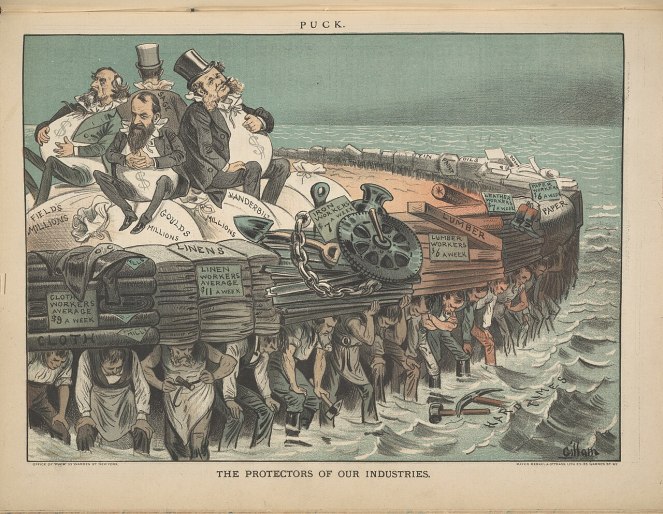
Chiron was in Taurus from 1876 to 1884 – full dates: 6th July to 31st August 1876, 21st April to 13th December 1877, 4th February 1878 to 14th June 1883, and 11th December 1883 to 31st March 1884.
This transit coincided with a big pile up of other planets in Taurus, including Neptune, Pluto, Jupiter and Saturn so it’s hard to discern the Chiron signal. We also had Uranus square Pluto, Saturn opposite Uranus and square Pluto, Chiron conjunct Neptune, and Chiron conjunct Pluto. In other words, it was a time of extreme change and revolution.
This period coincided with the early Industrial Revolution when cities were being electrified and the railways were being built. It was just after the Civil War in the US and the bulk of the transit coincided with the Gilded Age, a period of economic growth and industrialisation and mass immigration from Europe. But there was also widespread poverty and poor living conditions with the growth of urban slums and widening economic inequality.
Just before this transit, the Panic of 1873 had triggered an economic depression in the US and Europe that lasted until 1877. The depression lasted longer in the UK where it became known as the Long Depression, with some saying it lasted until 1899, long after this transit was over. In the US, the Specie Payment Resumption Act came into force in 1879, restoring the country to the gold standard for the first time since the Civil War.
In 1877 the Great Railroad Strike by workers in Baltimore spread to Pittsburgh and other cities where protests against wages and working conditions erupted into riots. Labour rights became a national issue and in 1880 the B&O Railroad started to cover sickness, injury and death benefits for their workers. Racial tensions were also rising, especially in the South where segregation had stripped African Americans of political power.

In China, the Northern Chinese Famine of 1876 to 1879 killed 30 million people and became the 5th worst famine in recorded history. It was caused by drought and crop failures which led to starvation. The weather was also bad in the West and in December 1879 the extreme cold brought record low temperatures to Europe, while in 1880-81 extreme cold and snowfall in the US became known as the Hard Winter.
Other significant events:
- The Tokyo Stock Exchange was established in 1878 and the Bank of Japan opened in 1882
- The first cash register was patented in 1879 by James Ritty
- Henry George self-published his book Progress and Poverty in 1879 exploring why poverty rises with technological progress
- The bank robber Ned Kelly was caught in 1880 by Australian police after a gun battle in Victoria 💰
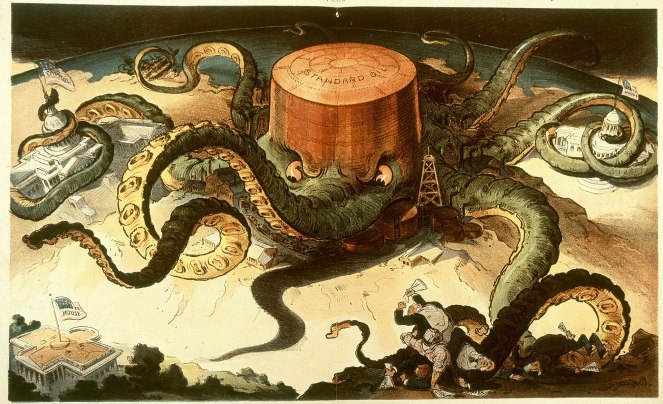
- The Standard Oil Company business trust was founded in secret in 1882 to control multiple corporations run by John D Rockefeller
- Budweiser beer 🍺 and Heinz Tomato Ketchup 🍅 were introduced in 1876 in the US
- Kansas became the first US state to prohibit alcohol in 1881 and it wasn’t repealed until 1948
- The Married Woman’s Property Act came into force in the UK in 1882 allowing women to buy, own and sell property, and to keep their own earnings
- Robert Louis Stevenson’s novel Treasure Island was published in book format in 1883
- Otto von Bismarck established one of the first publicly funded health care and social security laws in the Reichstag of the German Empire in 1883
- The Fabian Society was founded in 1884 to promote gradualist socialist progress
Chiron was next in Taurus from 1926 to 1934 – full dates: 25th May to 20th October 1926, 25th March 1927 to 7th June 1933, 22nd December 1933 to 23rd March 1934. Other transits during this time included: Uranus square Pluto, Saturn square Neptune, Saturn opposite Pluto and square Uranus, Chiron square Neptune, and Chiron conjunct Jupiter.
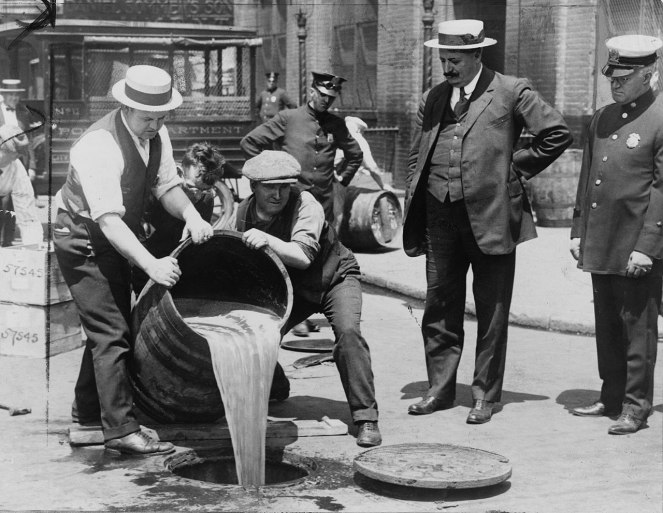
This period coincided with the economic boom of the Roaring Twenties following the end of the first World War. There was an explosion of culture and technological changes but these couldn’t prevent the crash that came when the bubble burst in 1929. In the US, the transit coincided with the Prohibition of alcohol that had already started in 1920 and ran until 1933, leading to a rise in organised crime, bootlegging and smuggling.
In 1929 an attempt was made to settle the WW1 reparations that Germany owed under the Treaty of Versailles. The Young Plan was introduced with payments set at 36 billion Reichsmarks. But the scheme only ran for a couple of years and was suspended in 1931 due to the Great Depression and payments were reduced by 90%.
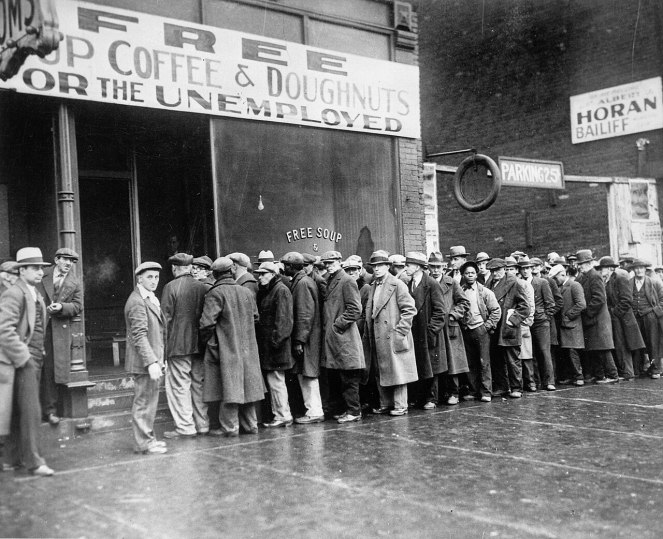
The Great Depression began after the Wall Street crash on 29th October 1929 and lasted until 1939, long after this transit ended. The crash wiped $30 billion from the New York Stock Exchange, ten times the amount of the annual budget of the federal government at the time. President Hoover imposed protectionist trade tariffs in 1930 under the Smoot-Hawley Tariff Act which led to retaliation from other countries and deepened the depression.
In May 1931 Austria’s largest bank, Credit-Anstalt, went bankrupt, starting the banking collapse in Central Europe that caused a financial meltdown worldwide. The bank was founded by the Rothschilds and its downfall triggered Germany to leave the gold standard, leading to political unrest and the rise of the Nazi party. It also provided Hitler an opportunity to blame ‘the Jews’ for the world’s economic problems. Hitler became chancellor in 1933 and used the Enabling Act to seize power after the Reichstag fire.
The Great Depression created high unemployment, poverty and hardship and a reduction in international trade. In the US, President Roosevelt introduced the New Deal, a series of social, economic and political reforms to deal with the depression. The Civilian Conservation Corps started in 1933 and provided government work relief for the unemployed, and Executive Order 6102 made it illegal to own substantial amounts of gold or bullion.
Meanwhile, drought struck the Great Plains in the US in 1930 and the first dust storm happened that year. The storms got gradually worse through the 1930s, stripping away the top soil that was already overworked and depleted due to agricultural practices. The Dust Bowl continued to spread but the worst droughts and storms didn’t start until after this transit was over and Chiron was in Gemini.
In China there was another famine in 1928–30 that led to 6 million deaths. Massive floods in 1931 also killed hundreds of thousands of people and led to further disease and starvation in the aftermath. These natural disasters coincided with the Chinese Civil War which ran from 1927 to 1937 and saw the rise of the Chinese Communist Party and Mao Zedong.
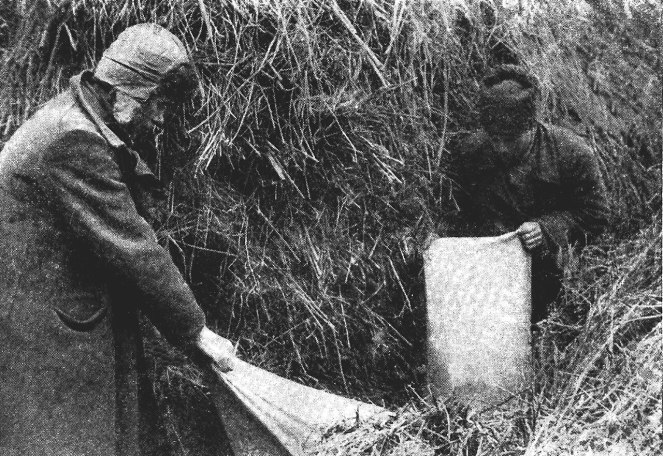
In the Soviet Union Stalin’s first five-year plan started in 1928 which included the economic goals of industrialisation and the collectivisation of agriculture that led to State controlled farms. This created widespread famines that killed millions of people, as well as protests and resistance against Stalin’s regime. Welsh Journalist Gareth Jones made his first report on the Holodomor famine in Ukraine in 1933.
Other significant events:
- Henry Ford announced the 8-hour 5-day work week in 1926, reducing the total hours worked in his factories to boost productivity and give workers more time to buy stuff and consume products 🚙
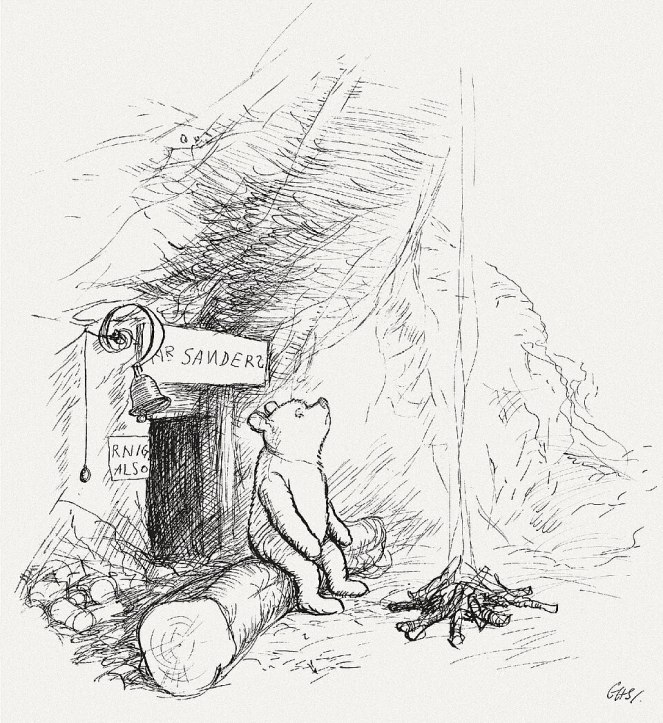
- Winnie the Pooh was published in a collection of stories in 1926, although the honey-loving bear first appeared in a poem published in 1924 🍯
- The FDA was established in 1927 to protect and promote public health by controlling food safety, cosmetics and medicines
- The League of Nations signed a treaty abolishing all forms of slavery in 1927
- The Museum of Modern Art in New York opened to the public in November 1929, just days after the Wall Street crash
- Gandhi led a 200-mile Salt March in 1930 protesting the British monopoly on the production of salt and then made his own salt from sea water. In 1932 and 1933 he went on hunger strike to protest against the caste system in India.
- Clarence Birdseye started selling his frozen foods for the first time in 1930 in Springfield, Massachusetts
- The first Mars bar was produced in the UK in 1932 by Forrest Mars, an American businessman 🍫
- Prohibition ended in the US in 1933, although it was repealed when Chiron had dipped into Gemini in December 1933
The last time Chiron was in Taurus was from 1976 to 1984 – full dates: 28th May to 13th October 1976, 28th March 1977 to 21st June 1983, 29th November 1983 to 11th April 1984. Other transits during that time included: Saturn conjunct Pluto, Saturn square Neptune, Saturn square Uranus, Chiron square Saturn, and Chiron opposite Uranus and both square the nodes.
This period coincided with a time of economic instability following the post-war boom that ended in recession in the early 1970s. The economy was still struggling as this transit began and the oil crisis in 1979 led to a drop in oil production and rise in prices following the Iranian Revolution. Iran’s oil production fell further in 1980 at the start of the Iran-Iraq War and this triggered a worldwide recession in the early 1980s. It also caused an oil surplus due to falling demand and in 1982 oil prices collapsed.
US President Carter made his ‘national malaise’ speech about the crisis of confidence in America in 1979. The following year he issued a grain embargo against the Soviet Union in response to the USSR invasion of Afghanistan. This led to a collapse in US grain prices and protests by farmers.
The conflict benefited Ronald Reagan who became president later in 1980 and he ended the embargo in 1981. Reagan continued the neoliberal economic policies of Carter who had deregulated the trucking, banking and airline industries.
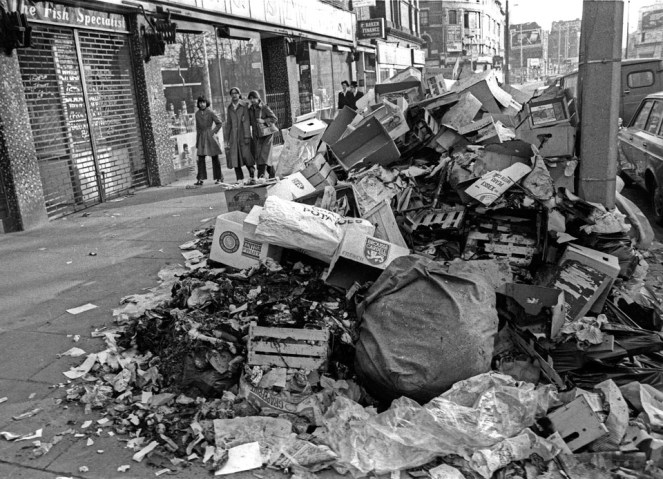
In the UK, inflation and unemployment were high and the country got an IMF loan in 1976 just before this transit began. A series of massive strikes crippled the country in 1978–79 in the Winter of Discontent and led to the collapse of the Labour government. Margaret Thatcher became PM in 1979 and introduced neoliberal reforms, including deregulation and privatisation. Inflation and unemployment continued to rise and another recession hit by 1980. Thatcher was re-elected in 1983.
In China the household responsibility system was introduced in 1979 as an experiment in agriculture where households were liable for the profit or loss of an enterprise. The system replaced collective farming and gave households more choice in what they could grow and how they used the land. They also introduced the One Child policy to control population growth.
In 1981 Bobby Sands, a member of the Provisional IRA, started his hunger strike in prison in Northern Ireland to protest their treatment by the British establishment. There had been earlier protests, including the blanket and dirty protests where prisoners refused to wash. None of this achieved anything so the hunger strikes began in 1980. Many other prisoners joined Sands in his hunger protest but it was eventually stopped after ten people, including Sands, had died.
Meanwhile in 1979 in Austria, an unfortunate man called Andreas Mihavecz was mistakenly locked in a cell for being a passenger in a car that had crashed. The three policemen involved all forgot about him and each assumed that one of the others had released the prisoner. He was trapped in the basement for 18 days without food or water and nobody heard him screaming for help. Eventually he was found and released.
Other significant events:
- The International Fund for Agricultural Development (IFAD) was founded in 1977 to address poverty and hunger in rural areas of developing countries by improving land and water management and food security
- The Three Mile Island nuclear power plant suffered a partial meltdown in 1979, releasing radioactive material into the environment and leading to new regulations in the nuclear industry
- The first recognised cases of AIDS appeared in 1981 amongst gay men in LA in the US
- Economic crisis and food shortages led to hunger demonstrations in Communist Poland in 1981 when huge crowds of mostly women and children demonstrated against food rations
- President Carter introduced a bill that allowed homebrewing of beer in the US in 1978, shortly followed by the founding of the Brewers Association and the rise of the craft beer movement 🍻
- McDonald’s introduced the Happy Meal in the US in 1979 which included a toy for kids, while chicken McNuggets arrived in 1983 🍔🍟🍗
- TV soap opera Dallas debuted in 1978, about an affluent Texan family involved in the oil industry and cattle ranching – a hugely popular show about unhappy rich people
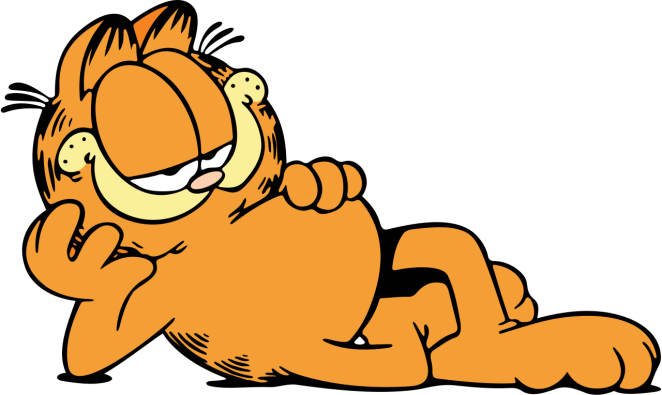
- The comic strip Garfield also debuted in 1978, featuring a fat, lazy cat who enjoys sleeping and eating lasagne, pizza and coffee – the darker side of Taurus! 🍕
- The Pac-Man game was released in Japan in 1980 where the goal is to eat all the dots in a maze and avoid the ghosts 👻
- Yuppies became a ‘thing’ in 1980 – upwardly mobile young urban professionals with Filofaxes, shoulder pads and big hair throwing money around and being obnoxious
Many of these archetypal patterns are already repeating – probably due to the recently ended Uranus in Taurus transit – including rising inflation and prices, rising inequality between rich and poor, a global trade war, farmers under siege, and the Iran War and closure of the Strait of Hormuz with its effect on the distribution of oil and goods, including fertiliser. Interestingly, Iran will have its Chiron return in 2028, the first time since the revolution in 1979.
You can explore more history for Chiron in Taurus here: The Verdant Path
Next time, we’ll look at how Chiron in Taurus works in your personal chart…
Thanks for reading! If you enjoy this blog and would like to support my work, please donate below 🍵. Thanks in advance! 🙏❤️


Dear Jessica,
Taurus Chiron in the 2nd house here. Always the bottom can fall out of my self-esteem and finances. I’m really prudent with money, to the point I never really spend to enjoy anything trivial. I do invest in quality things I find useful and which will last. I don’t think I will ever feel secure, money-wise or emotionally. And that seems part of the twisted charm. There is a constant feeling of threat to my security that keeps me awake and it makes me respect what I do have. I also now have to enough life experience to think that I will survive whatever misfortune may come (which is perhaps more Moon in Scorpio almost opposite Chiron, 5 degrees apart).
Kind regards,
Willem
LikeLiked by 2 people